




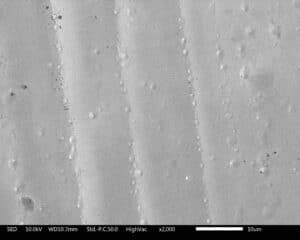
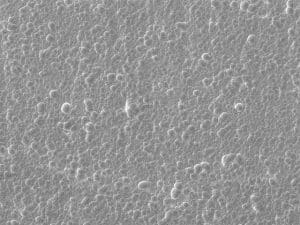
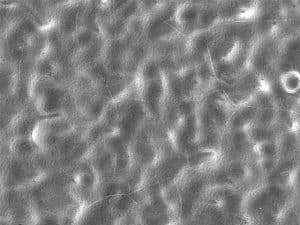
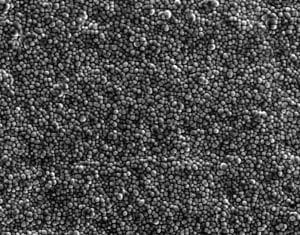




Electroless nickel PTFE is a composite coating that combines a nickel-phosphorus matrix with PTFE particles to provide low friction, corrosion resistance, wear protection, and self-lubricating performance.
Armoloy Coatings
Armoloy Coatings
Nyflon™ Electroless Nickel PTFE
Self-lubricating performance with low friction and clean release
What is Nyflon™ Electroless Nickel PTFE?
Nyflon is Armoloy’s electroless nickel PTFE coating that combines low friction, self-lubrication, corrosion resistance, and release performance in a thin, uniform deposit.
It belongs to a class of composite coatings known as electroless nickel PTFE, which combine a nickel-phosphorus matrix with evenly dispersed PTFE (polytetrafluoroethylene) nanoparticles. The nickel deposit provides structural hardness and wear resistance, while the PTFE ensures a non-stick, self-lubricating surface. In industrial contexts, electroless nickel PTFE is often referred to as a nickel Teflon® coating.
Unlike spray-on lubricants or PTFE topcoats, Nyflon’s PTFE is co-deposited throughout the entire coating. This allows the surface to retain lubricity and release performance as it wears. PTFE topcoats, by contrast, lose these properties at the surface.
Nyflon is applied through an electroless deposition process, producing uniform thickness across complex geometries and internal surfaces without electrical current. Typical deposits range from 0.0002” to 0.0006” (5.08–15.24 µm), supporting precision components that require both performance and dimensional control.
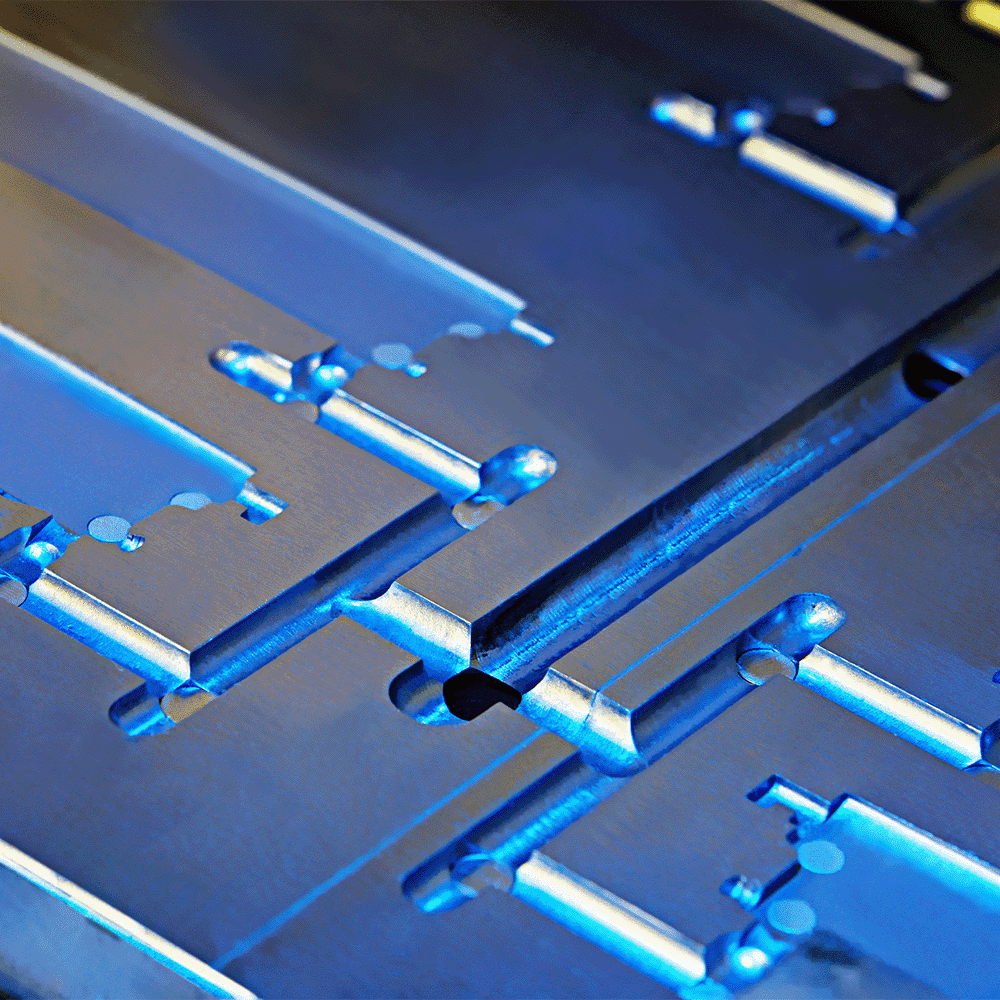
Engineers specify Nyflon for applications where parts must resist sticking, galling, and sliding friction in corrosive or wear-prone environments. Typical uses include injection molds, packaging equipment, and precision mechanical assemblies.
Performance Characteristics
- Up to 67% reduction in coefficient of friction
- Hardness >55 HRC as deposited; up to 67 HRC with heat treatment
- Corrosion resistance tested per ASTM B-117
- Effective deposits as low as .0002″ – .0006″ (5.08 to 15.24 µm )
- Processing temperature < 200°F (< 93°C)
- 400°F (204°C) max working temperature
- Coefficient of thermal expansion 13 x 10-6/°C
- Applicable to nearly all base metals
- Smokey satin appearance

Why Choose NyflonTM Self-Lubricating Coating?
Nyflon is engineered as a self-lubricating surface treatment for components requiring low-friction operation without reliance on external oils or greases. By co-depositing PTFE within an electroless nickel matrix, Nyflon provides a high-durability, self-lubricating interface that excels in precision molding and sliding assemblies.
Engineers specify Nyflon™ Electroless Nickel with PTFE when the application requires:
- Integrated Self-Lubricating Performance: Critical for “sealed-for-life” hardware or clean-room environments where external lubricants are prohibited or maintenance-intensive
- Low-Friction Sliding Contact: Necessary to mitigate galling, drag, and thermal build-up in mechanical assemblies, ensuring consistent movement and reduced surface fatigue
- Enhanced Release Behavior: Optimized for molding, forming, and packaging operations where surface adhesion dictates cycle times and part quality
- Corrosion Resistance in Harsh Environments: Essential for protecting substrates against humidity or chemical exposure while maintaining mechanical lubricity
- Geometric Uniformity on Complex Parts: The electroless process ensures the self-lubricating properties are applied with 100% consistency across internal bores, threads, and intricate geometries
Nyflon is widely used in injection molds, blister-pack tooling, and high-speed packaging gear, as well as precision sliding assemblies and actuators where dimensional stability and permanent lubricity are non-negotiable.
Compare Armoloy Coatings
| Thin Dense Chrome | Nickel | Hard Chrome | Xylan | Molybdenum Disulfide | |
|---|---|---|---|---|---|
| Common Industries | Precision Bearings, Medical Instruments and Devices, Robotics, Linear Motion Systems, Molds, Dies, and much more. | Packaging, Blister-Pack Molding, Automotive, Electronics, and more. | Shafts, Molds, Dies, Hydraulic and Pneumatic Rods, Industrial Rolls, and more. | Fasteners and Threaded Components, Molds, Pumps, Pistons, Valves, Marine Equipment, and more. | Microelectronics, Photovoltaics, Automotive, Sliding Applications, Vacuum Systems, and more. |
| Generally Used For |
Corrosion Resistance
Wear Resistance
Improves Machine Performance
|
Corrosion Resistance
Wear Resistance
|
Wear Resistance
Corrosion Resistance
|
Release
Corrosion Resistance
|
Release
Lubricity
|
| Advantages | Thin Dense Chrome is a pure metallic zero valence chromium coating that prevents metal failures and improves machine performance. | Nickel coatings are renowned for their corrosion and wear resistance. | Hard chrome plating is selected for applications that require surface durability, dimensional restoration, and reliable performance under load and motion. | Xylan is built for extreme environments where corrosion resistance, friction and wear reduction, and buildup prevention are paramount. | Molybdenum Disulfide is known for its exceptional lubrication, high load-bearing capacity, and temperature resistance. |
| Disadvantages | Thin Dense Chrome can be affected by prolonged exposure to saltwater and caustic environments. | Nickel coatings struggle with rolling contact fatigue, highly abrasive operations and, depending on the type of nickel coating, are typically applied in thicker layers than Thin Dense Chrome coatings. | Hard chrome coatings are typically very thick, often exceeding the requirements for precision applications. Moreover, they do not achieve a perfect bond with substrates and exhibit lower hardness compared to thin dense chrome. | Xylan coatings are sacrificial coatings designed to wear down with use, which creates the need for reapplication. | Molybdenum disulfide is also a sacrificial coating designed to wear down with use, and it struggles in humid conditions. While the coating performs extremely well in a vacuum, water vapor can often limit its applications. |
| Thickness |
1.27 – 25.4 µm
0.00005″ – 0.001″
|
2.54 – 76.2 µm
0.0001″ – 0.003″
|
25.4 – 762 µm
0.001″ – 0.03″
|
12 – 38 µm
0.0005″ – 0.0015″
|
5.08 – 7.62 µm
0.0002″ – 0.0004″
|
- AS9100D
- ISO 9001:2015
- ISO 14001:2015
- REACH Compliance
- Nadcap
- ISO 19011
- RoHS Compliance
- WEEE Compliance
- NAMSA
- ISO 10993
- ASTM B117 Salt Spray (Fog) Testing
- ASTM E 376 Measuring of Coating Thickness by magnetic Field or Eddy Current (Electromagnetic) Test Methods
- Fed-STD-141, Method 6192 Taber Abrasion Test
- ASTM 487 Measurement of Metal and Oxide Coating Thicknesses by Microscopical Examination of a Cross Section
- ASTM 499 Measurement of Coating Thickness by the Magnetic Method
- ASTM B504 Measurement of Thickness of Metallic Coatings by the Coulometric Method
- Hydrogen Embrittlement ASTM F519
- ASTM B 568 Measurement of Coating Thickness by X-Ray Spectrometry
- ASTM F519 Mechanical Hydrogen Embrittlement Testing of Plating Processes
- Microhardness of Materials ASTM E 384
- ASTM B571 Qualitative Adhesion Testing of Metallic Coatings
Nyflon™ Features & Benefits
Self-lubrication
Reduces friction, wear, and galling between sliding components, extending component life without the need for additional lubricants
High corrosion resistance
Protects components from corrosive environments, particularly in harsh chemical or saltwater environments
Uniform coating distribution
Ensures consistent coverage over complex geometries & internal surfaces
Non-stick surface
Prevents materials from adhering to component surface, simplifying cleaning processes & reducing downtime for maintenance
Good hardness
Provides enhanced wear resistance, crucial for components subject to constant or heavy mechanical contact
Thermal stability
Maintains performance characteristics in a wide range of temperatures – suitable for parts used in high-heat applications
Electrical insulation
Can act as an insulator in certain applications, providing safety and functionality in electrical & electronic components
Low coefficient of friction
Enhances efficiency of moving parts, reducing energy consumption & improving overall system performance
Non-wetting surface
Repels water & other fluids – an advantage in applications where moisture or fluid resistance is crucial
Chemical resistance
Protects against a wide range of chemicals, making it suitable for use in chemical processing industries
Ductility
Retains good high-temperature properties, ensuring the coating does not become brittle under thermal stress
Reduces operating noise
Beneficial for slides and cylinder/piston assemblies
Additional Metal Treatments

Services at Armoloy
Armoloy is here to provide support for your project, starting from the discovery phase and continuing through a successful production launch. Whether coatings are considered during the initial part design phase or become necessary due to product failures in the field, our team can assist you at any stage in the process.
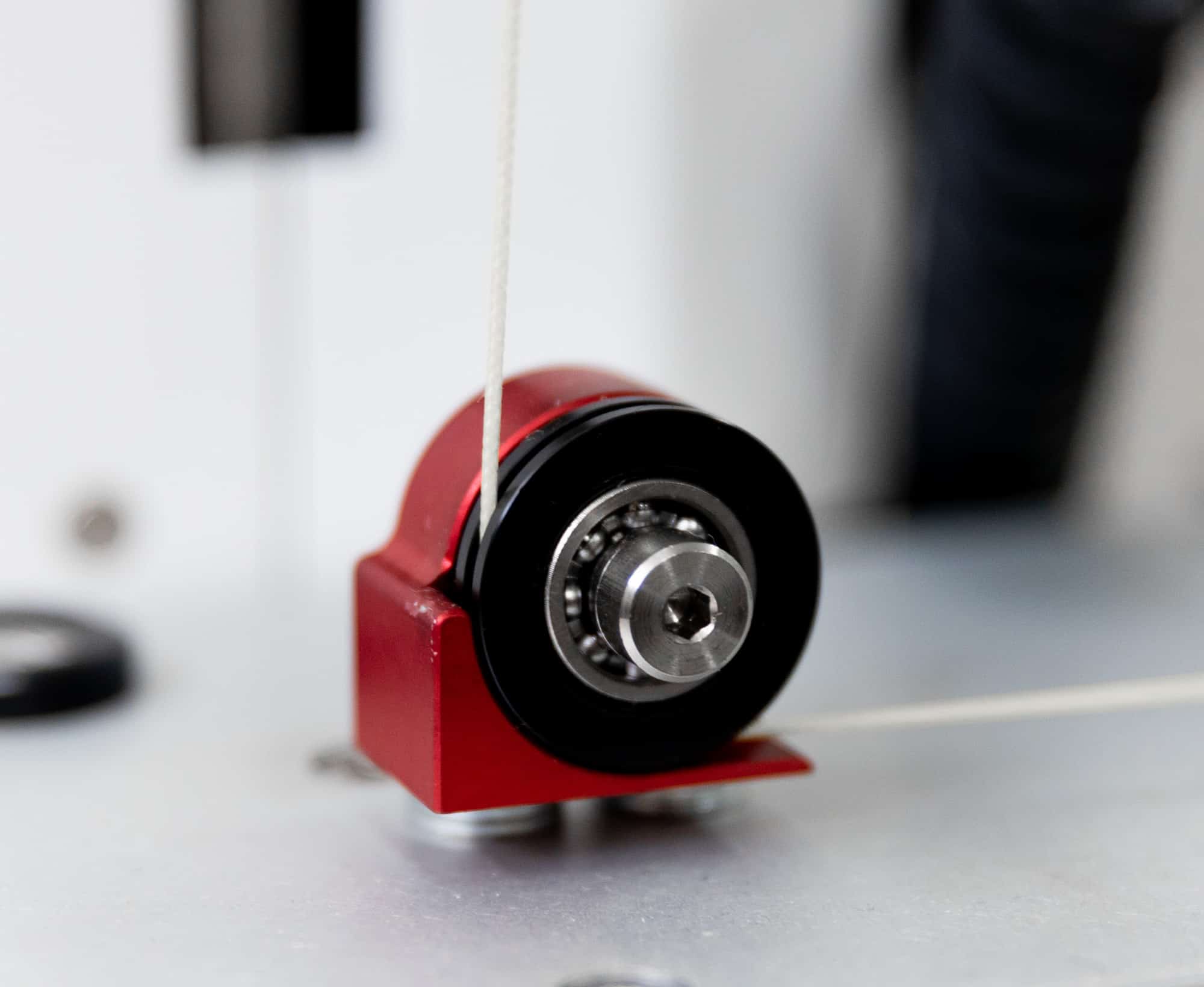
Research & Development
Fully equipped R&D plating lab for test runs, prototyping, and continual development of our plating technologies. Our turnkey approach ensures high-quality outcomes for your project.
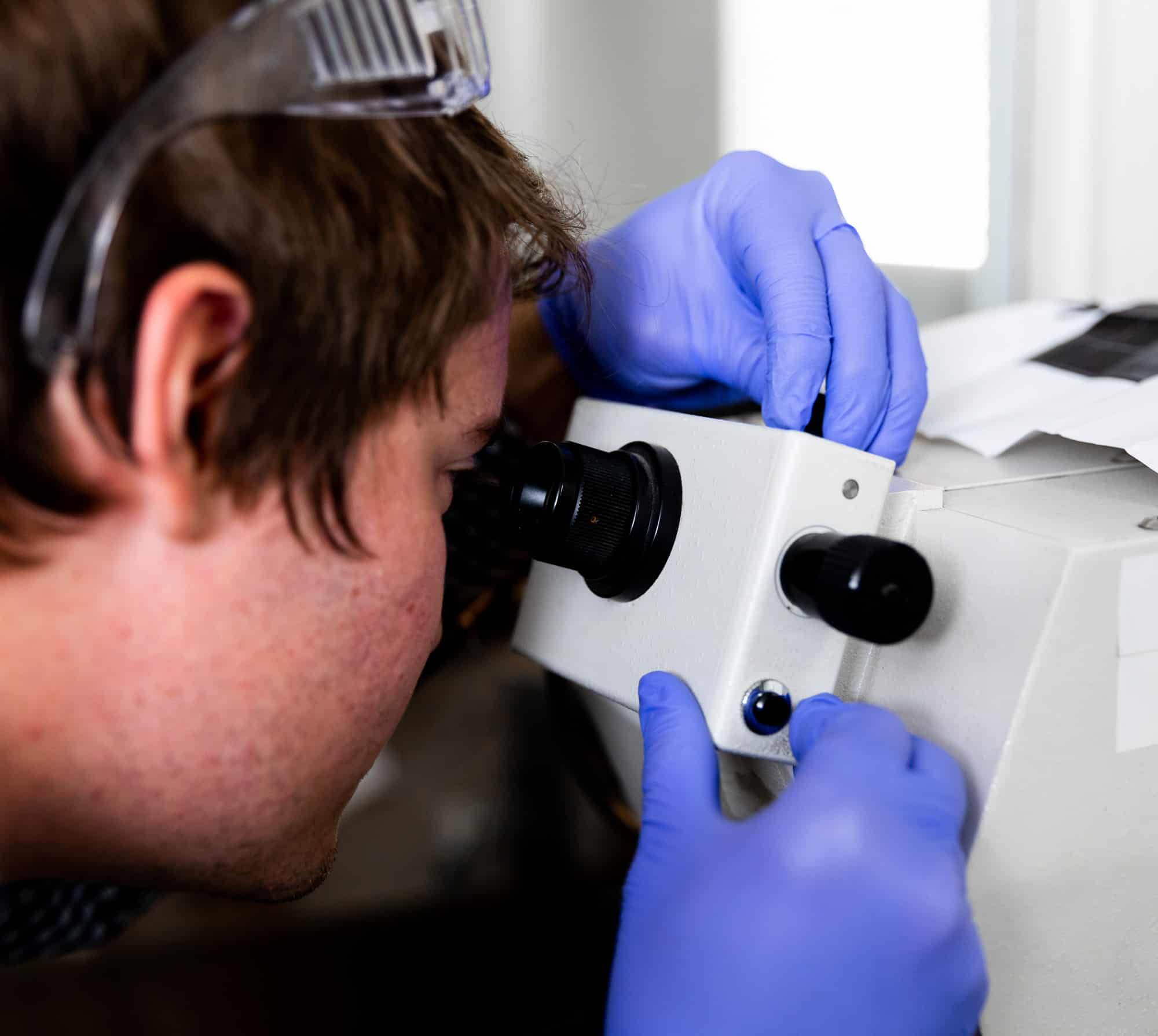
Process Development & Validation
Support from design to product launch with coating selection, prototyping, testing, PPAP validation, and plating production on any scale. We also support a range of ASTM and AMS test methods with a Nadcap-certified laboratory.
Fulfillment
Armoloy ensures the development of a robust plating process that can be distributed to one of our 16 plating facilities. We’ll handle prototyping, process validation, and much more.
How Metals Fail
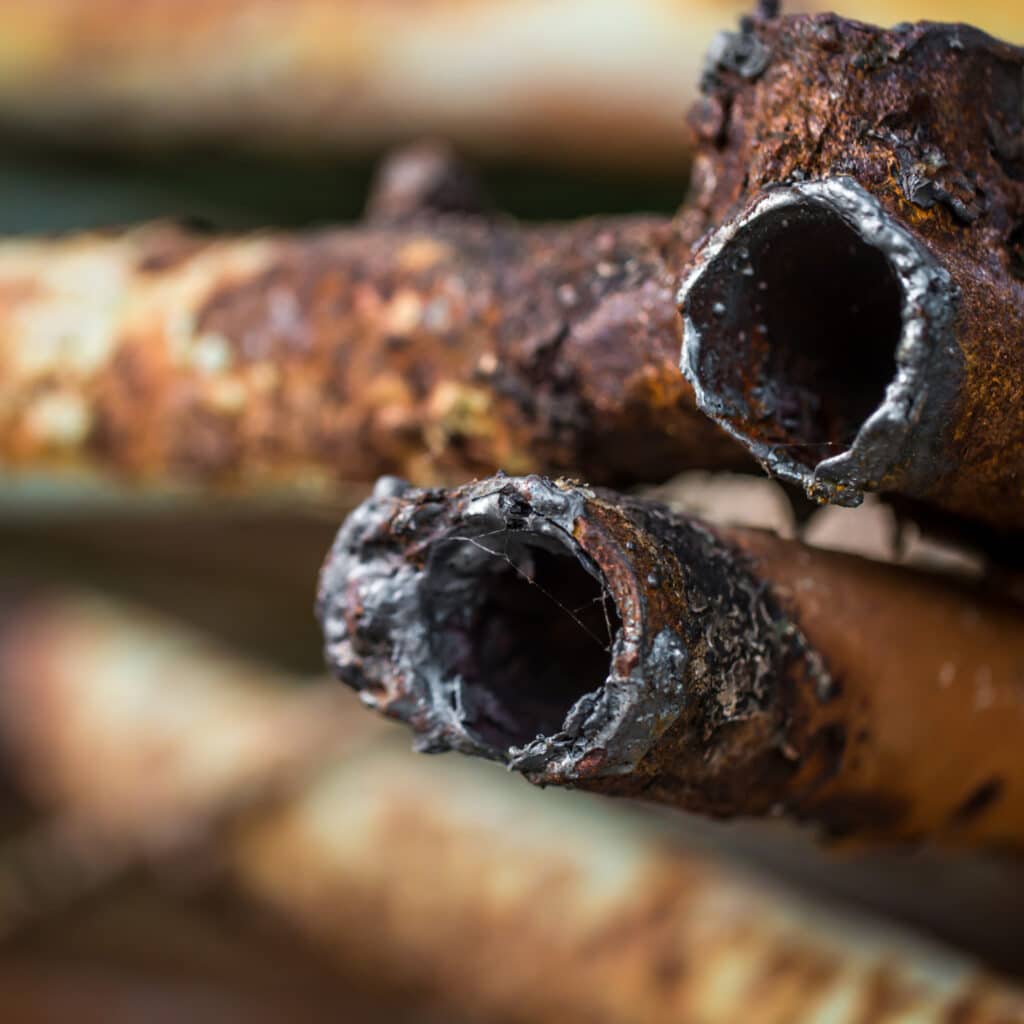
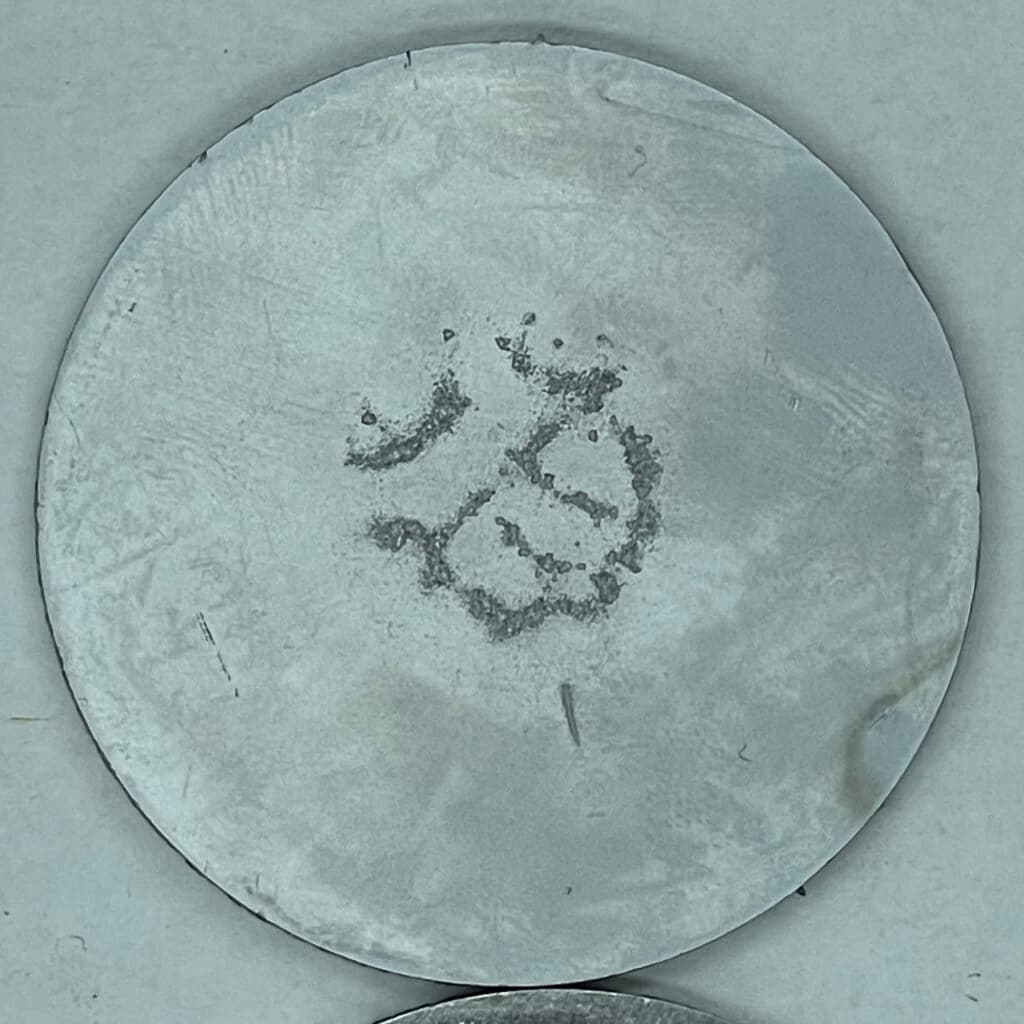
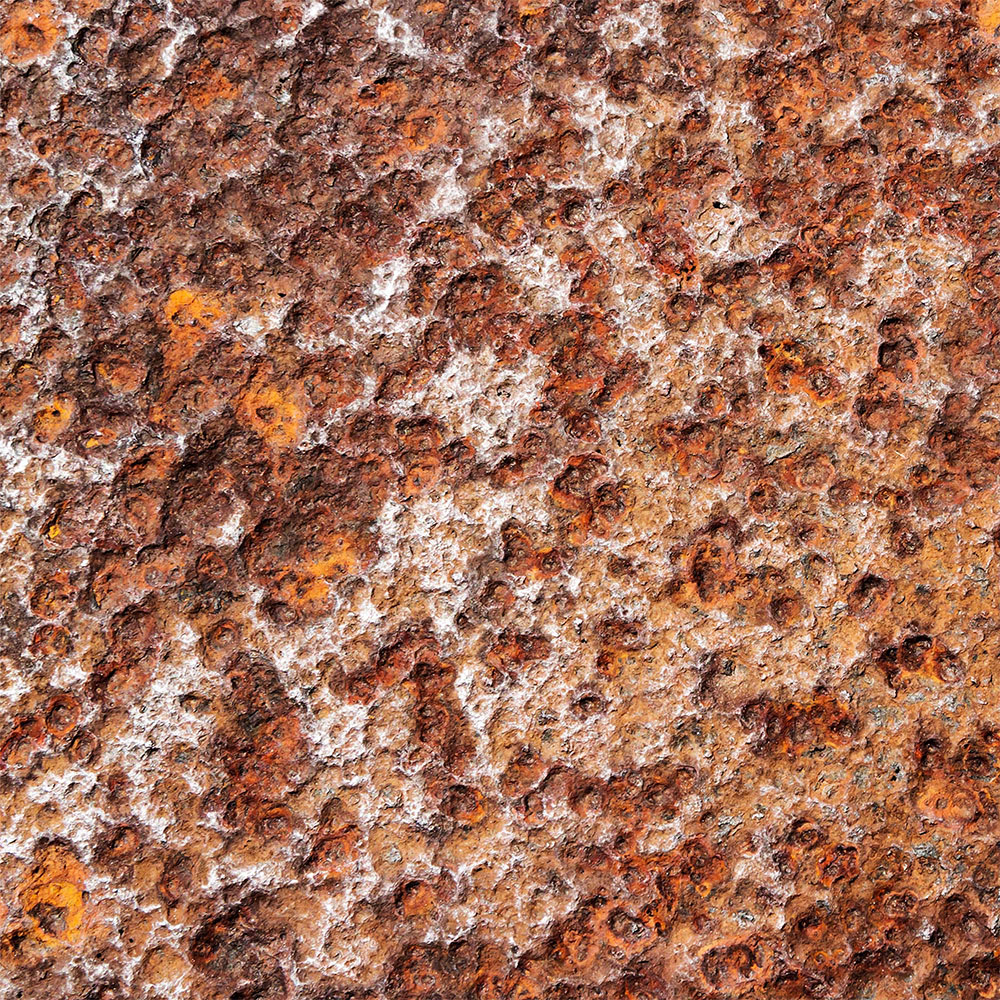
Some of the most common metal failures include:
Armoloy’s different metal coating solutions help industries avoid costly metal failures and unplanned downtime.
Frequently Asked Questions
Nickel Teflon® is a common term for a nickel PTFE composite coating that combines electroless nickel durability with PTFE-based lubricity and release properties.
Teflon® is a registered trademark of The Chemours Company FC, LLC.
Nyflon is Armoloy’s electroless nickel PTFE coating, designed to deliver low friction, release performance, corrosion resistance, and wear protection in a thin, uniform deposit.
Electroless nickel with PTFE works by co-depositing PTFE particles throughout an electroless nickel matrix. The nickel contributes hardness and corrosion resistance, while the PTFE helps improve lubricity, release performance, and resistance to sticking.
Electroless nickel with PTFE is used when applications require a combination of lubricity, corrosion resistance, uniform thickness, and release performance. Compared with standard electroless nickel, it adds self-lubricating behavior. Compared with PTFE topcoats, it provides more durable, long-lasting performance.
Nickel PTFE coatings are applied through an electroless deposition process in which nickel is chemically deposited while PTFE particles are co-deposited throughout the coating. This produces a uniform coating across complex geometries and internal surfaces.
Nickel PTFE coatings are applied through an electroless deposition process in which nickel is chemically deposited while PTFE particles are co-deposited throughout the coating. This produces a uniform coating across complex geometries and internal surfaces.
Key advantages include low friction, self-lubricating behavior, corrosion resistance, non-stick release properties, uniform coating thickness, and improved wear performance.
Self-lubricating behavior refers to the coating’s ability to reduce friction and resist sticking because PTFE particles are built into the nickel-phosphorus coating matrix, helping the surface provide lubricity without relying on added oils or greases.
Nickel PTFE coating is commonly used on mold components, packaging equipment, blister-pack tooling, thermoforming parts, sliding assemblies, and other precision components that need low friction, easy release, and corrosion resistance.
Benefits can include lower friction, improved release, corrosion resistance, wear resistance, uniform coating distribution, reduced sticking, and longer service life for precision parts.
Nyflon can achieve a coefficient of friction as low as 0.07, depending on application conditions.
Nyflon is typically applied at thicknesses from 0.0002” to 0.0006” (5.08 to 15.24 µm).
Nyflon™ Electroless Nickel PTFE can operate at temperatures up to approximately 400°F (204°C), depending on the application. It is also suitable for low-temperature and cryogenic environments.
Nyflon Electroless Nickel PTFE can be applied to most base metals, including tool steels, stainless steel, copper, brass, and aluminum.
Yes. Nyflon provides high corrosion resistance and is tested per ASTM B-117.
Professional electroless nickel PTFE coating services are typically offered by specialized coating providers that support coating selection, testing, validation, and production. Armoloy provides technical support, process development, and fulfillment for Nyflon coating projects. Contact us to discuss your application.
Contact Us
Need hardness with release? Let’s explore Nyflon coating.
Request Information