
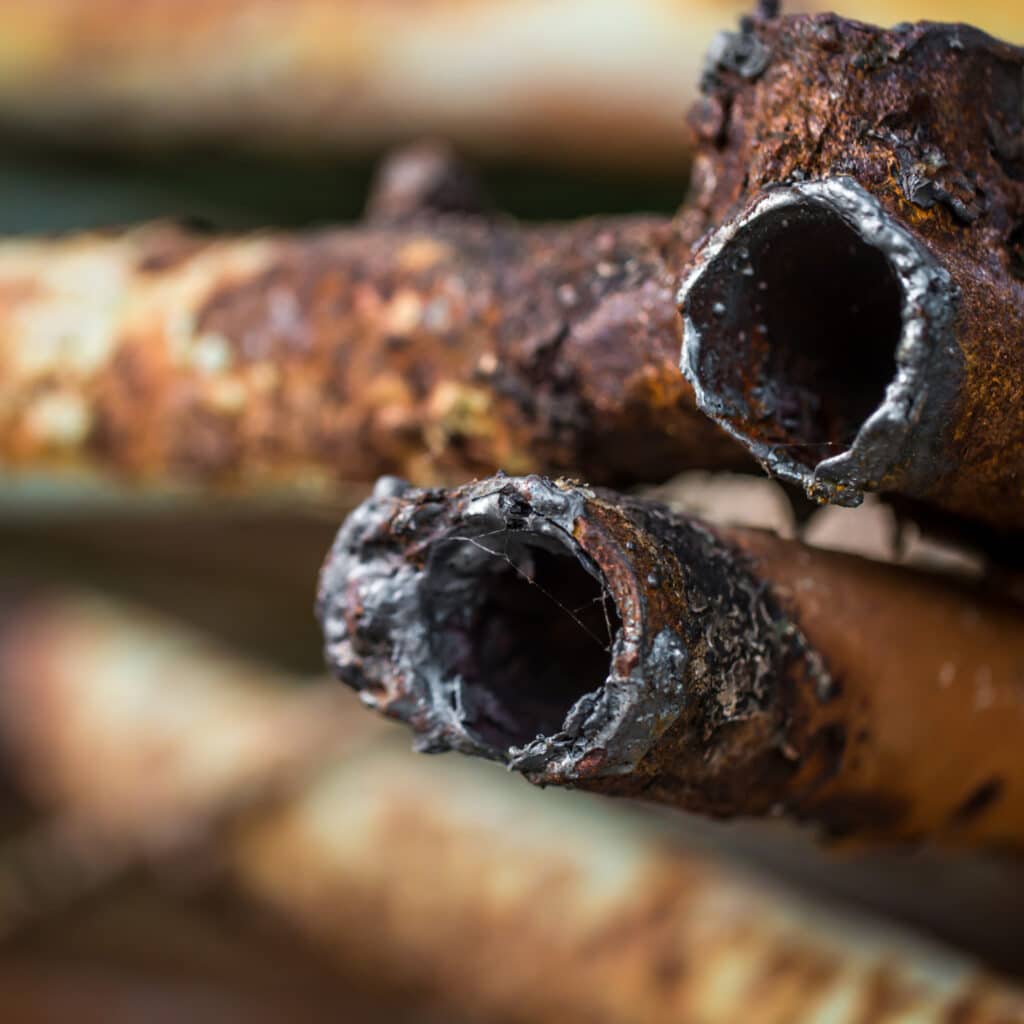
Metal erosion can occur in metals for many reasons, including fluid properties, environmental conditions, surface characteristics, mechanical stresses, and more. The common factor among all causes of erosion is surface deterioration, which ultimately leads to material loss.
For companies that design, manufacture, or use metal parts, tools, devices, or equipment, there are two ways to deal with erosion. The first is to see the gradual deterioration of metal assets as inevitable and to deal with the consequences as they occur. The second is to take action to counteract metal erosion from becoming erosive metal failure and thereby minimize the consequences.
Erosion will continually attack metal surfaces. The question is whether a business takes action to defend its assets? and if so, what actions does it take?

Why Does Metal Erosion Happen?
Erosion is a form of material failure that occurs when a moving fluid interacts with a metal surface, gradually removing material over time. In some environments, the fluid may also contribute to corrosion, creating a combined erosion-corrosion mechanism that can accelerate surface damage. As high-velocity fluids flow across a metal surface, they can wear away protective surface layers and exploit microscopic surface imperfections. Over time, these small defects can grow and combine, leading to localized attack, increased surface roughness, and accelerated material loss. As a result, systems characterized by rough surfaces, high turbulence, or fluids containing suspended abrasive particles are often more susceptible to erosion and erosion-corrosion damage.
Erosion is Going to Happen. Why Fight It?
There are many reasons that taking a fatalist attitude about erosion is not a good business strategy. One is that it can be very costly. When a part, tool, or machine fails, it can create damage that goes far beyond the part itself. In a worst-case scenario, the failure of one small part worth a few dollars could, conceivably, create a chain reaction that results in thousands of dollars or more in damage.
Metal failure can also bring work processes to a halt, and the loss of productivity can have a negative impact on revenue. Plus, there is the loss of customer goodwill if a shutdown lasts long enough that it jeopardizes production deadlines. Also, if there is a contractual obligation related to the output of a particular process, there could even be legal ramifications.
And, of course, amplifying the risk of simply accepting metal erosion is the unpredictability of metal failure. Even if a business regularly inspects crucial metal assets and monitors the progression of erosion, there is no way to know if an item will fail six months from now or six minutes from now. As a result, companies that take this approach either have to replace worn items as soon as damage is noticeable or hope for the best and prepare for the worst.
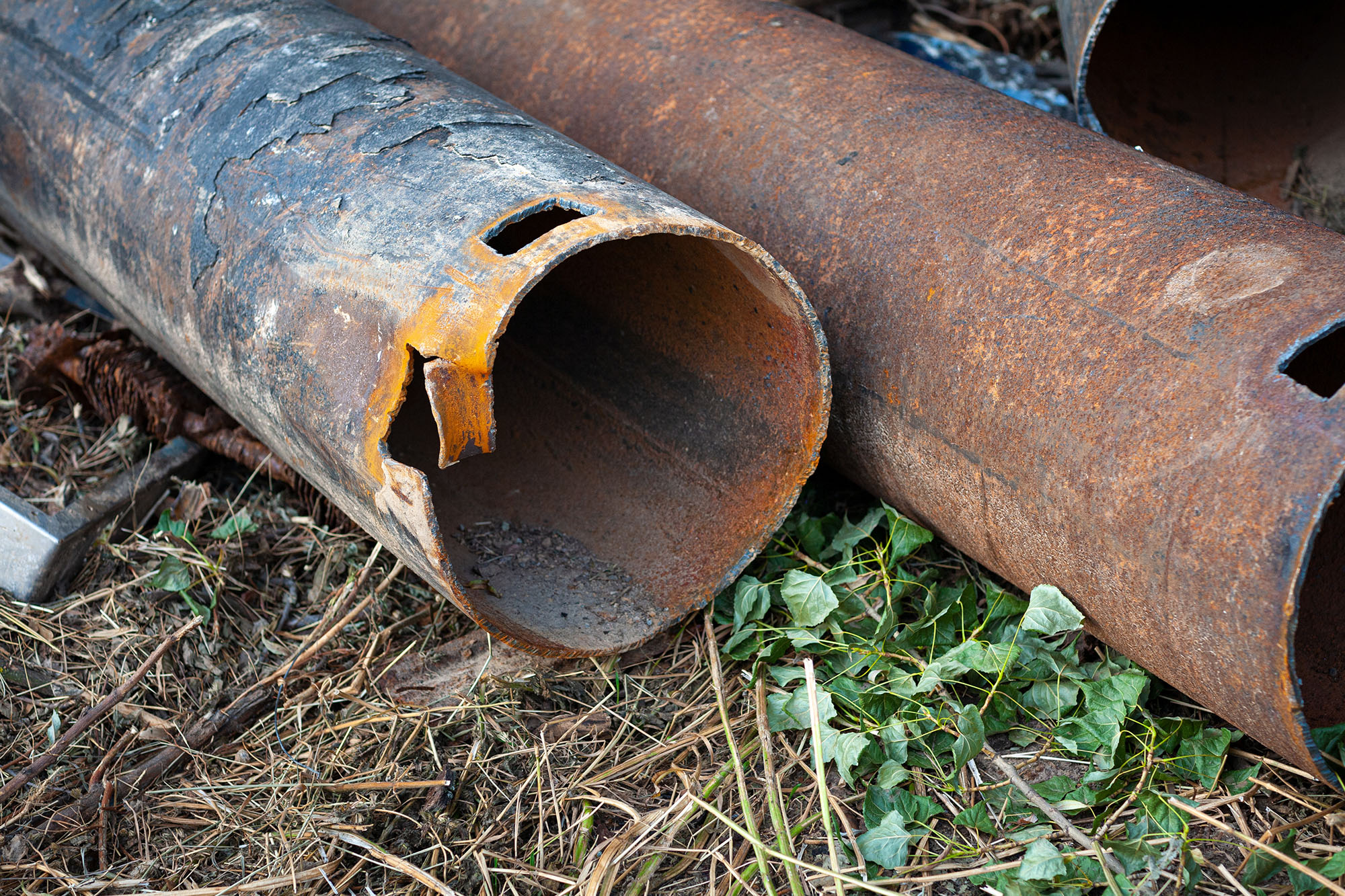
Severely eroded metal pipes
How Can I Address Metal Erosion?
There are multiple ways to address metal erosion and failure—some more advantageous than others. As noted above, one option is to let it happen and simply budget for the necessary repairs or replacements. But, of course, it seems that problems have a habit of arising at the worst possible time—like the shutdown of a production line when a company is working ‘round the clock’ to meet a delivery deadline.
Another option is to “go back to the drawing board” and re-engineer an item in a way that makes it less subject to erosion, such as thickening it so it takes longer to erode or changing its shape to reduce the effect that moving liquids and gasses have on it. This can, of course, be a very expensive endeavor.
A third option is to coat erosion-prone surfaces with chromium. One of the hardest metals on the planet, chromium can withstand far greater erosive forces than most other types of metal or metal alloy. Plus, it can be applied in incredibly thin layers that offer outstanding erosion resistance without affecting an item’s shape or functional characteristics in any substantial way.
Will even the most advanced chromium coating protect an item indefinitely? No. It is virtually impossible to resist a force of nature like erosion forever. That said, however, a chromium coating can dramatically decrease the rate at which an item erodes, and the coating can be removed and reapplied as needed. While there is a certain amount of time and expense associated with each application, it is far less than replacing or repairing items at the frequency necessitated by unchecked erosion.
Mitigating Erosion Before It Starts
Being proactive by applying chromium to vital metal assets before they are ever put into service and refreshing that coating as needed, typically after countless use cycles, is a far more effective strategy than being reactive and addressing problems as they arise. The time and effort put into protecting items are much less than the requirements to fix or replace them.
Plus, with metal assets properly protected, everyone can focus on important tasks and not be waiting for and worrying about the next metal failure incident.
Frequently Asked Questions
Share on LinkedIn Share on Facebook