

Armoloy Specifications
Armoloy Specifications
ASTM E384
Standard Test Method for Microindentation Hardness of Materials
Armoloy Specifications
What is ASTM E384
The standard outlines procedures for:
- Performing microindentation hardness tests using Knoop and Vickers indenters.
- Verifying and calibrating microindentation hardness testing machines.
- Calibrating standardized test blocks for ensuring measurement accuracy.
ASTM E384 is widely utilized in industries such as aerospace, electronics, biomedical, and materials research, where precise hardness measurements at micro scales are critical.
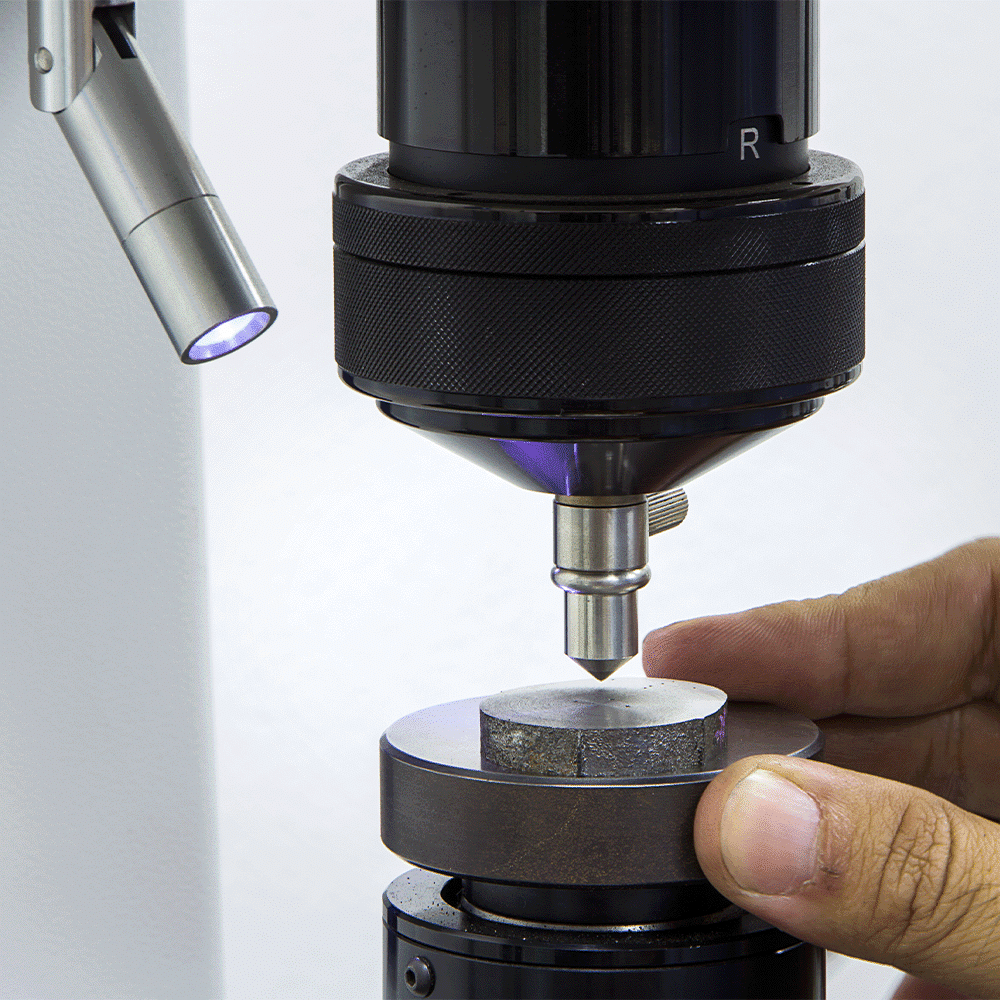
Purpose and Applications of ASTM E384
Microindentation hardness testing as per ASTM E384 is essential for:
- Evaluating surface hardness of thin coatings, surface treatments, and small components.
- Characterizing material properties in microstructures, such as individual phases or constituents.
- Assessing hardness gradients in case-hardened materials or weld zones.
- Quality control in manufacturing processes involving heat treatment, plating, or surface modification.
- Research and development for new materials and surface engineering techniques.
This method is particularly valuable when assessing materials that are too thin or small for macroindentation tests, allowing for precise measurement of localized hardness variations.
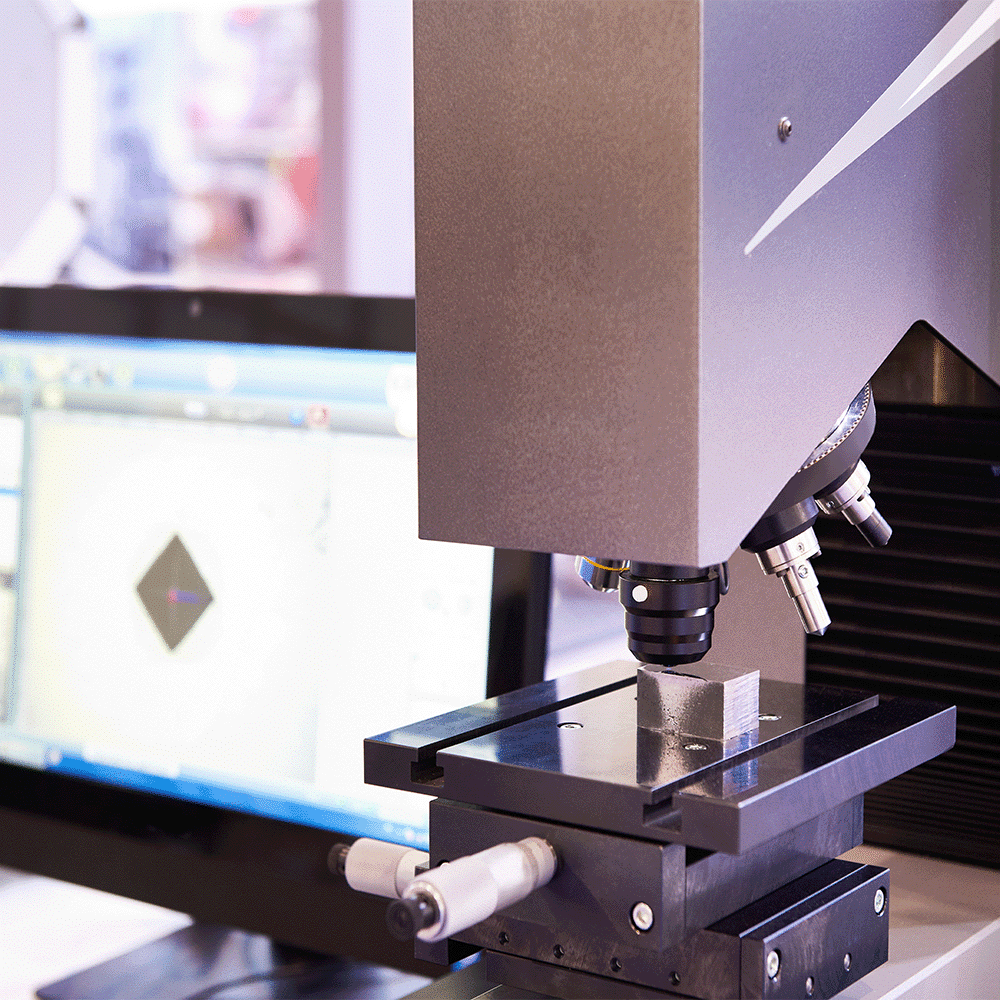
ASTM E384 Testing Methodology
Indenters Used
- Vickers Indenter: A square-based pyramidal diamond indenter with face angles of 136°, suitable for general-purpose microhardness testing.
- Knoop Indenter: An elongated, rhombic-based pyramidal diamond indenter with angles of 172.5° and 130°, ideal for testing thin materials or coatings due to its shallow penetration depth.
Test Procedure
- Sample Preparation: The test surface must be flat, smooth, and free from contaminants or surface treatments that could affect the results.
- Indentation: The selected indenter is pressed into the material’s surface under a controlled force, typically ranging from 1 to 1000 grams-force (gf).
- Measurement: After removing the load, the dimensions of the indentation (diagonals for Vickers; long and short axes for Knoop) are measured using a microscope equipped with a filar eyepiece or an image analysis system.
- Hardness Calculation: Vickers is calculated by dividing the applied force by the surface area of the indentation, whereas Knoop divides the applied force by the projected area of the indentation.
The choice between Vickers and Knoop depends on the material’s characteristics and the specific application requirements.

Industries Utilizing ASTM E384
- Aerospace: Assessment of surface treatments, coatings, and heat-affected zones in critical components.
- Electronics: Evaluation of thin films, solder joints, and microelectronic components.
- Biomedical: Testing of implant materials, coatings, and surgical instruments for hardness and wear resistance.
- Automotive: Analysis of case-hardened parts, coatings, and weld zones for durability and performance.
- Materials Research: Development and characterization of new materials and surface engineering techniques.
Benefits of Working with an ASTM E384-Compliant Provider
Non-destructive
Minimal material removal allows for testing of valuable or limited samples
High precision
Enables measurement of hardness in small or specific regions, such as microstructures or thin coatings
Versatility
Applicable to a wide range of materials, including metals, ceramics, polymers, and composites
Quality control
Essential for verifying surface treatments, heat treatments, and material consistency in manufacturing processes

Specifications at Armoloy
Armoloy offers plating solutions that meet ASTM E384 to support both regulatory compliance and individual project needs. Explore common specifications and accreditations we work with, and contact us to find the right solution for your application.
Disclaimer
The information provided on this page, including any descriptions, interpretations, or summaries related to ASTM E384, is offered solely by The Armoloy Corporation for general informational purposes. This content reflects Armoloy’s internal understanding and practical application of ASTM E384 within its own processes and does not constitute official or authorized guidance from ASTM International.
ASTM E384 is a proprietary standard developed and owned by ASTM International. Armoloy makes no claim to ownership of this specification and does not reproduce, quote, or distribute any protected content from the original document. References to ASTM E384 are made in accordance with fair use principles and are intended to illustrate Armoloy’s alignment with widely recognized microindentation hardness testing practices.
This content is not intended to substitute for the official specification, which should be obtained directly from ASTM International. Readers are strongly encouraged to consult the original standard and qualified professionals for definitive technical or compliance information.
The Armoloy Corporation makes no warranties, express or implied, regarding the accuracy, completeness, or applicability of this content and disclaims all liability for any reliance placed upon it. This disclaimer is subject to change without notice and does not create any contractual relationship or obligation.