
Start from stiffness/backlash targets and allowable torque/heat. Validate by torque trend and positioning error under load.
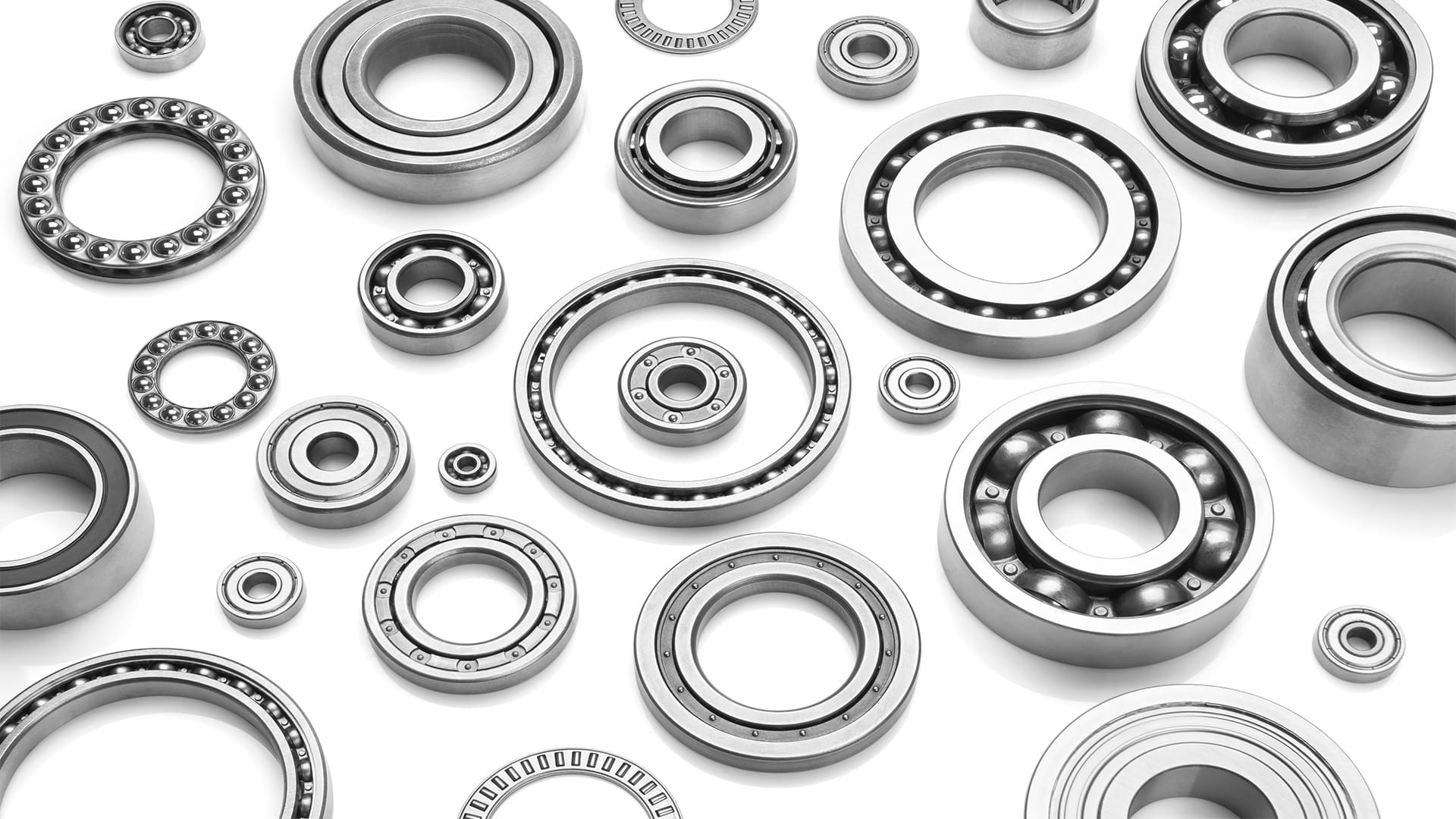
what you should know
what you should know
Crossed-Roller Bearing (CARB-type)
Selection, Failures, Fixes & Coatings
What Is a Crossed-Roller Bearing?
A precision rotary bearing using cylindrical rollers crossed at 90° in V-groove raceways. It supports radial, axial, and moment loads simultaneously with high stiffness and low running torque.
Common styles: split inner (RB), split outer (RE), and one-piece integrated (RU/turntable) rings.
Preload is set via ring spacing, shims, or clamp torque.
Typical uses: robot joints, rotary tables/indexers, precision stages, cobots/AMRs, metrology axes, medical imaging gantries, semiconductor equipment, small slewing rings.

Selection Cheatsheet (Load, Stiffness, Accuracy, Environment)
- Stiffness target: higher preload → higher rigidity & friction; pick preload to meet positional accuracy/backlash goals.
- Ring style: split-inner (RB) eases shaft mounting; split-outer (RE) eases housing mounting; integrated (RU) simplifies build & sealing.
- Accuracy grade: match runout/tilting stiffness to servo bandwidth and pointing error budget.
- Environment: sealing for dust/splash; low-outgassing lubricants for cleanroom/vacuum; anti-corrosion surfaces in washdown.
- Coatings: use for corrosion/fretting resistance and controlled friction; verify thickness so preload/clearance and runout stay in spec.
Environment → Attributes Matrix
| Environment | Material / Coating | Preload / Accuracy | Mounting | Sealing | Lubricant |
|---|---|---|---|---|---|
| Robot joints / cobots | Through-hardened raceways; optional anti-corrosion on rings | Medium preload for stiffness vs. torque | Integrated (RU) or split rings with precise clamp torque | Integrated seals or external labyrinths | Low-bleed grease; oil/air-oil at higher speed |
| Precision stages / metrology | Low-roughness raceways; controlled-thickness coatings only | High preload + high accuracy grade | Ground flats; cross-bolt pattern; shim-set preload | Non-contact seals; dust covers | Light oil/grease; torque-stable at temp |
| Cleanroom / Vacuum | Passivated/clean surfaces; validate chemistries | Light preload to limit torque | Integrated units reduce outgassing surfaces | Non-contact shields; minimal elastomers | Low-outgassing grease or vacuum-rated oil |
| Dusty / Abrasive | Hard, low-roughness surfaces; wear-resistant coatings | Medium preload; avoid drag spikes | Rigid housings; guard against clamp distortion | Labyrinths + deflectors; purge paths | Grease with sealing behavior; set purge interval |
| Washdown / Splash | Chromium-family or Ni-P (validated) | Light-to-medium preload; verify seal drag | Protect faces; re-measure after coating | Contact seals + external deflectors; avoid direct jets | NSF H1 grease compatible with cleaners |
Common Failures & Diagnostics
Rapid Triage
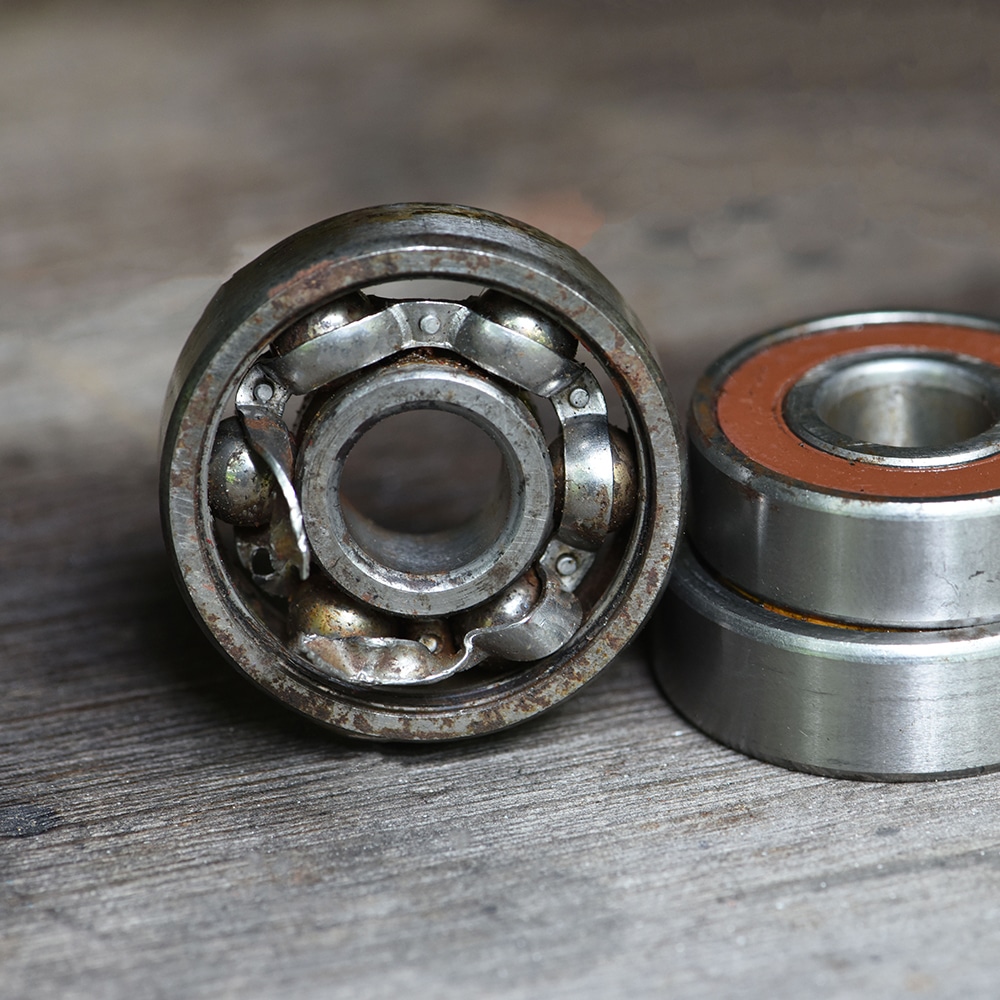
1) Loss of Preload / Backlash Growth
Symptoms
Increased positioning error, chatter, servo oscillation, audible click on reversals.
Likely causes
Clamp relaxation, housing/shaft creep, thermal cycles, shim stack compression.
Checks
Torque audit & pattern; preload torque/drag trend; runout map hot vs. cold.
Non-coating actions
Re-set preload; improve rigidity; use proper torque sequence & anti-rotation features.
When surface treatments help
Secondary—coatings won’t hold preload; they can reduce seat fretting once clamp is correct.
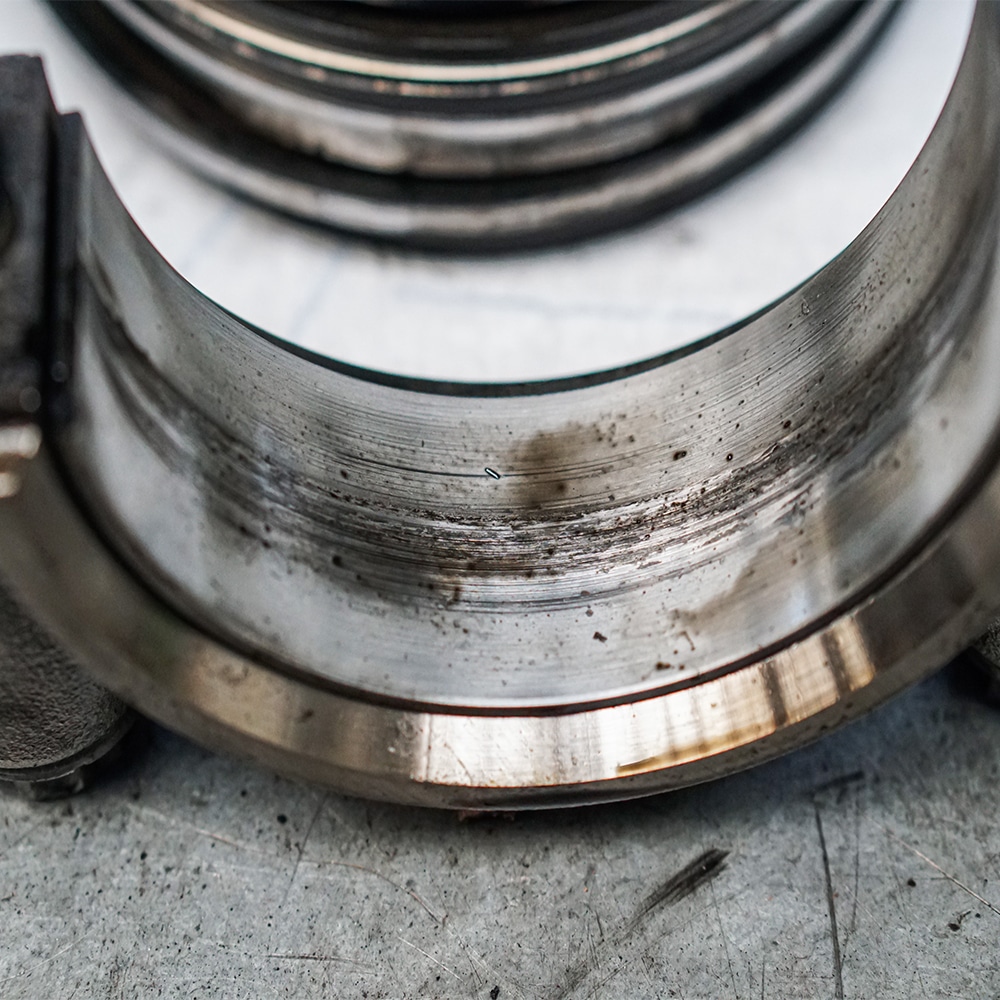
2) Smearing / Scuffing at Roller Contacts
Symptoms
Rising torque, metallic sheen/streaks, heat during rapid moves.
Likely causes
Viscosity too low at temperature, over-preload, high acceleration with poor supply.
Checks
Lubricant grade vs. temp; fill quantity; duty cycle; seal drag.
Non-coating actions
Increase viscosity or move to oil/air-oil; reduce preload; minimize seal drag.
When surface treatments help
Low-roughness/micro-textured chrome reduces adhesion once film is adequate.
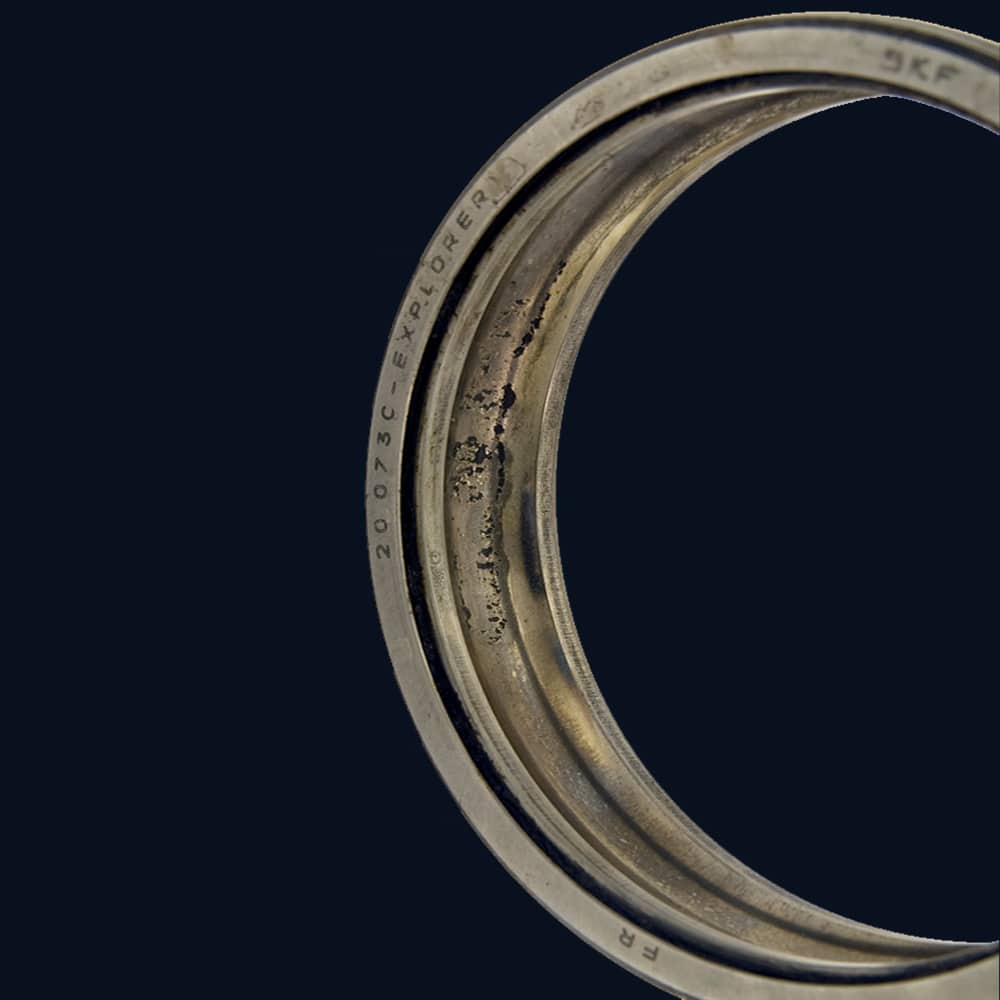
3) Clamp-Induced Distortion (Runout)
Symptoms
Runout spikes after assembly, non-uniform torque during rotation.
Likely causes
Uneven bolt torque, thin flanges, dinged pilot surfaces, burrs/particulate.
Checks
Blue check; TIR before/after clamp; torque sequence & angle monitoring.
Non-coating actions
Resurface seats; use cross-pattern torque; add stiffness or pilot fits.
When surface treatments help
Not a fix for geometry—focus on mounting quality first.
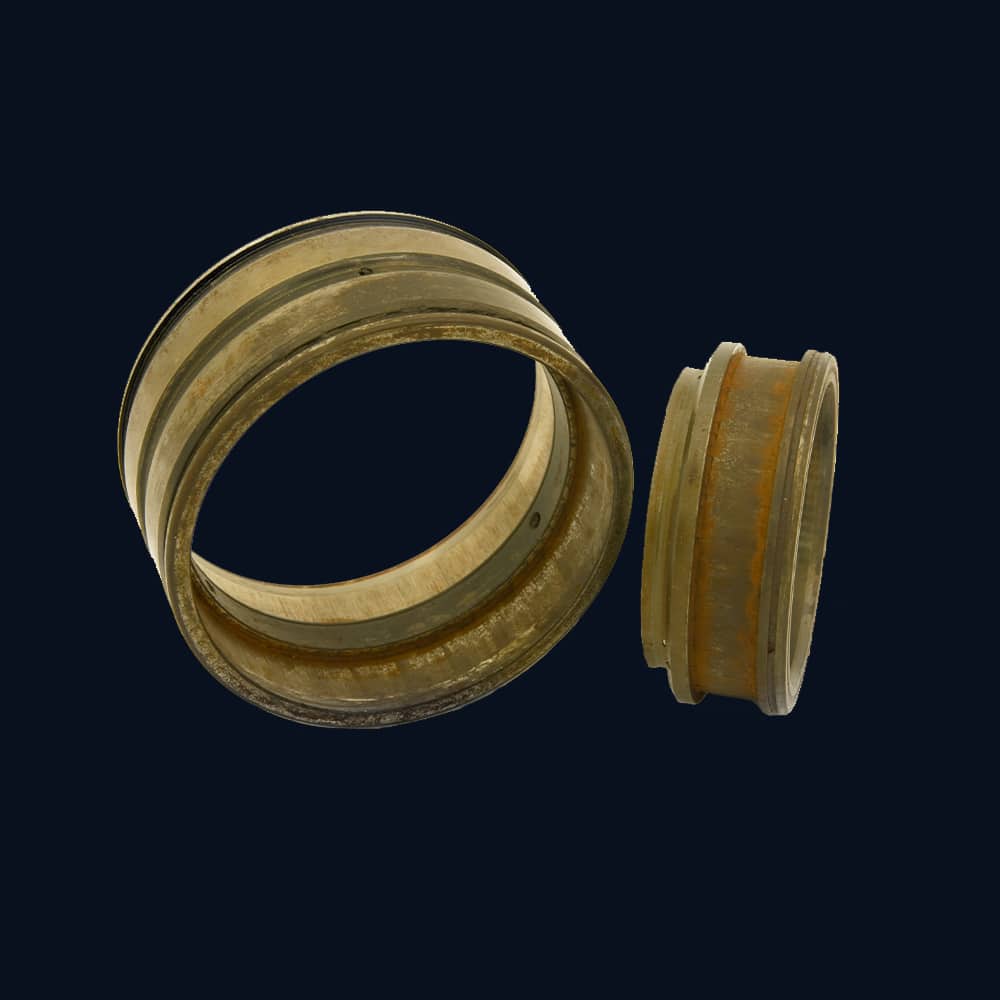
4) False Brinelling / Fretting at Seats (Idle Vibration)
Symptoms
Reddish debris at faces, pitch-spaced dull indentations, noisy start-up.
Likely causes
Transport/idle vibration with light preload; micro-motion; inadequate film persistence.
Checks
Handling/transport profile; grease bleed; clamping integrity.
Non-coating actions
Stabilize transport; use grease suited for idle vibration; verify clamp.
When surface treatments help
Micro-textured chrome on seats reduces adhesion once micro-motion is controlled.
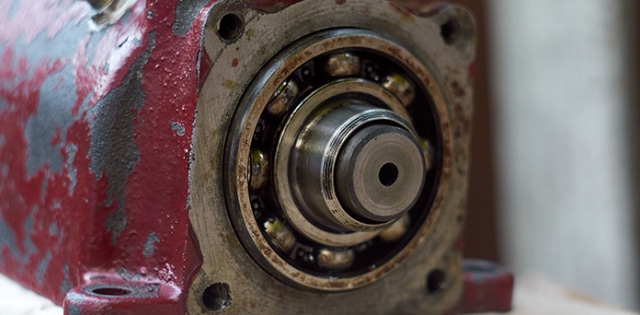
5) Contamination / Torque Spikes
Symptoms
Gritty feel, torque ripple, rising noise floor.
Likely causes
Ingress from inadequate seals/guards; debris during assembly; purge missteps.
Checks
Cleanliness protocol; seal condition; torque trace; particle analysis.
Non-coating actions
Upgrade sealing/guards; clean assembly; set purge/change intervals.
When surface treatments help
Hard, low-roughness surfaces extend life once ingress is controlled.
The Big Three: Corrosion, Lubricity, Dimensional Stability
Use coatings where they address surface-driven issues (corrosion, fretting, abrasion). Coatings don’t replace correct preload, mounting flatness, or sealing.
| Concern | What it means | Non-coating controls (first) | When coatings help | Notes |
|---|---|---|---|---|
| Corrosion resistance | Prevent rust at raceways/faces in wet/chem environments | Seals/deflectors; manage jet angle; compatible grease; drying | Thin dense chrome, micro-cracked chrome, Ni-P (validated) | Re-measure preload/runout after processing |
| Lubricity | Stable film at crossed line contacts under preload | Correct viscosity @ temp; avoid over-grease; minimize seal drag | Low-roughness or micro-textured chrome reduces smearing/fretting | Coatings complement—not replace—lube strategy |
| Dimensional stability | Hold preload/clearance & runout after mounting/processing | Flat, rigid seats; torque sequence; verify clamp distortion | Controlled-thickness coatings; post-coat geometry checks | Thin sections are sensitive to clamp and thickness |
Fits, Mounting & Preload (Quick Rules)
-
Flatness first: lap/stone mating faces; pilot fits prevent slip; remove burrs/particulate.
-
Torque sequence: cross-pattern, small increments; measure TIR before & after clamp.
-
Preload: set by shims/clamp per catalog; verify torque vs. drag/starting torque at temperature.
-
After coatings: re-measure ring height/runout; small thickness shifts can change preload/accuracy.
Checklist
-
Mating face flatness/parallelism verified
-
Cross-pattern torque with traceability
-
Preload set and logged hot & cold
-
Post-process geometry inspection complete
Frequently Asked Questions
Yes—flatness/parallelism and a controlled torque pattern are critical to avoid distortion and runout growth.
Integrated turntable (RU-type) often include seals; split-ring types usually rely on external labyrinths.
They can if thickness isn’t controlled. Measure ring height/runout and verify preload after processing.
Crossed-roller offers higher stiffness/accuracy and lower torque for a given size; ball slewing can be more tolerant of contamination and cost-effective at very large diameters.
Case Snapshots
- Robot elbow backlash creep — Backlash grew after thermal cycling.
Actions: re-set preload via shim pack; cross-pattern torque; switched grease for better film at temp.
Outcome: backlash stabilized; servo oscillations reduced. - Indexer torque ripple — Torque spikes after washdown maintenance.
Actions: cleaned seating faces; new labyrinth; H1 grease validated vs. cleaners; re-torqued in cross pattern.
Outcome: torque trace smoothed; temperature normalized.

Have a failure photo, sound clip, or spec?
Upload it for a no‑fluff diagnostic checklist. We’ll map symptoms → checks → next actions (and only propose coatings when they’re truly indicated).