
- Armoloy Southeast has specialized in high-precision chrome plating for nearly 30 years, serving aerospace, defense, nuclear, and industrial customers that rely on accurate, repeatable performance.
- Led by engineer Chris Lynch, the team combines long-tenured expertise with disciplined processes, Nadcap accreditation, and a growing coating portfolio that now includes ME-92 for medical applications.
- Through strong quality systems, environmental stewardship, and collaboration across the Armoloy network, the facility continues to deliver consistent results and trusted support for complex, specification-driven work.
In the heart of South Carolina, Armoloy Southeast has built its reputation on precise chrome plating for industries where every thousandth of an inch matters. The facility joined the Armoloy network in 1995, when it was founded by the Lynch family, who still own and operate it today. What began as a small shop is now a Nadcap- and AS9100D-certified operation backed by an experienced team that delivers consistent results.
For more than thirty years, aerospace bearings, defense components, nuclear hardware, and precision tools have moved through their tanks with the same expectation: precise coatings, reliable turnaround, and repeatable performance. Many of the people behind that work have been here for decades, carrying forward the craftsmanship and discipline that shaped the shop from its early days.
Today, that work is supported by Chris Lynch, an engineer who grew up in the business and now leads the facility’s technical sales. We sat down with Chris to talk about their coatings, team culture, and the new capabilities shaping their next chapter.
Coatings and Applications Supported by Armoloy Southeast
Armoloy Southeast works primarily with aerospace, defense, nuclear, injection molding, and industrial automation customers. Across those sectors, one category of parts dominates the workflow: bearings.
“Bearings are what we run the most,” Chris explains. “For aerospace and defense customers, nodular Thin Dense Chrome meets the hardness and friction requirements, and we process it every day.”
Beyond bearings, the shop handles a wide range of parts, including:
- Firearm components, including AR-15 bolt carriers
- Injection molds and extrusion dies that need bright, smooth finishes
- Select nuclear hardware, coated to strict AMS and MIL specifications
- Machined tools and automation components
To support these applications, Armoloy Southeast offers four coatings:
- Nodular Thin Dense Chrome® (nTDC) — a nodular surface finish that excels in wear and galling applications, and is the preferred choice for aerospace and defense bearings.
- Electrolizing® (microcracked TDC) — a smooth, microcracked surface that builds to higher, more uniform thickness and delivers bright finishes; ideal for firearm parts, nuclear hardware, and components with strict surface finish requirements.
- XADC® Diamond Thin Dense Chrome — a hard, polished surface used for molds and dies that need improved lubricity and release.
- ME-92® (biocompatible microcracked TDC) — the facility’s newest capability, offering a medical-grade version of microcracked chrome for parts requiring validated biocompatibility.
Most customers arrive with prints that already specify a coating. For those who don’t, the team looks at load, motion, lubrication, surface finish, thickness range, and any specification requirements.
“When someone calls with a surface finish requirement or a spec, we know which coating system fits,” Chris says. “And if a customer isn’t sure what they need, we work through the application and narrow it down.”
ME-92: A New Path Into Medical Applications
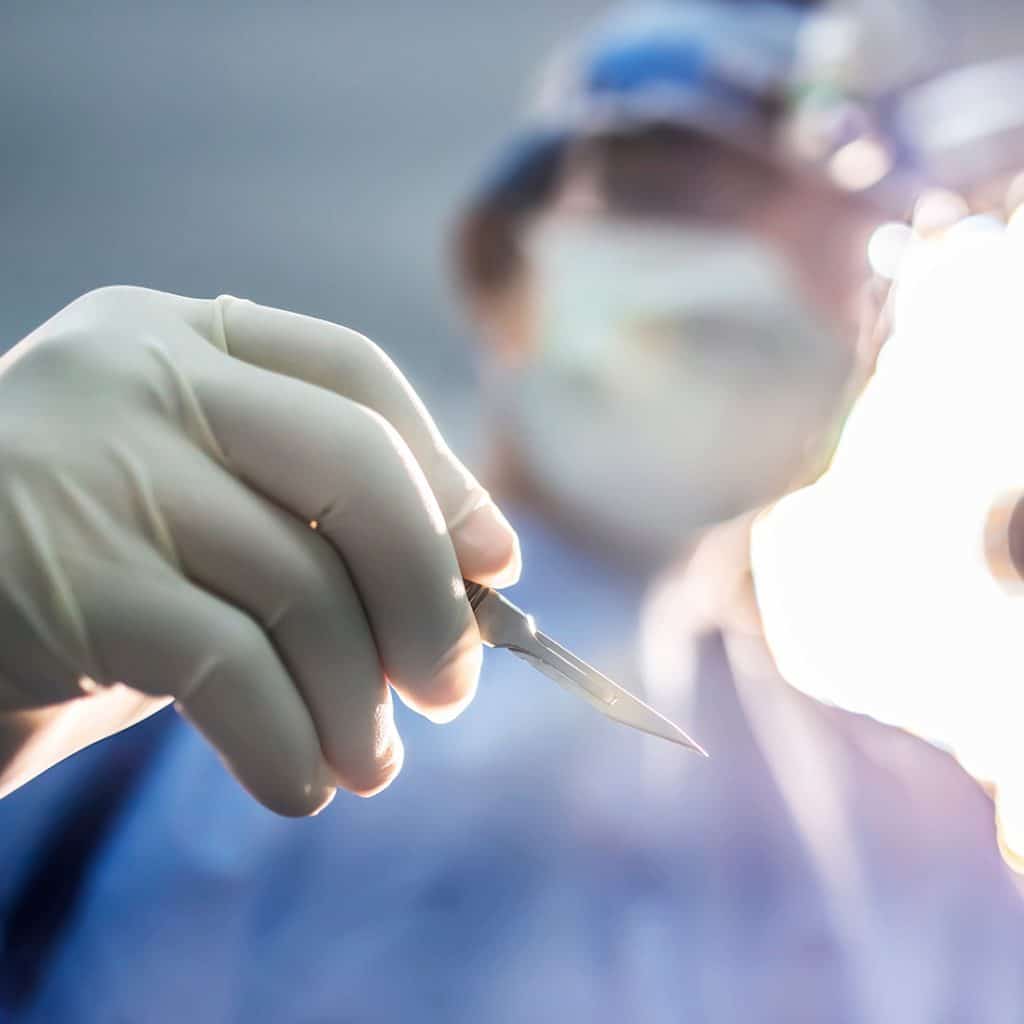
Armoloy Southeast recently added ME-92 to its coating portfolio — a biocompatible microcracked chrome designed for medical devices. Manufacturers had been asking for a coating that matched the durability and smoothness of microcrack TDC with validated biocompatibility for patient-contact environments.
“It was a natural step for us,” Chris says. “We run microcrack chrome every day. ME-92 gives customers a medical-grade option without changing how we operate.”
To qualify the coating, the facility submitted 60–70 test coupons to NAMSA, the independent lab that performs the full ISO 10993 biocompatibility suite. Tests included cytotoxicity, hemolysis, intracutaneous, pyrogen, and systemic toxicity, as well as sterilization compatibility.
ME-92 is the medical counterpart to Electrolizing® (microcracked TDC). Both create a smooth, microcracked texture capable of higher, more uniform thickness and bright surface finishes. ME-92 adds the critical advantage of biocompatibility, making it suitable for surgical instruments, medical tooling, and components that need both performance and safety clearance.
For Armoloy Southeast, ME-92 opens the door to new opportunities in the medical sector. “The benefits of our microcrack chrome are proven,” Chris shares. “ME-92 lets us take those same properties into a new industry.”
Accreditations, Specifications, and Environmental Stewardship
Armoloy Southeast’s work is anchored by two core accreditations: Nadcap for chemical processing and AS9100D with ISO 9001:2015 for quality management. These standards shape how aerospace and defense work must be done, requiring documented controls and disciplined processes.
Nadcap, in particular, demands tight control over every step of plating — tank chemistry, temperature, racking, current density, and final inspection. In their most recent audit, the facility earned 18-month merit status — a designation reserved for audits strong enough to extend the standard 12-month cycle.
“We process aerospace hardware every day,” Chris says. “Nadcap gives customers confidence that the coating will meet the same standards every time.”
The team also plates to several key specifications, including:
- AMS 2438 for aerospace Thin Dense Chrome
- AMS 2460 and AMS 2406 for microcracked and hard chrome
- MIL-STD-171 for firearm components
These standards define the required thickness ranges, finishes, inspections, and documentation. Many customers arrive with prints that reference them directly. For those who don’t, the team reviews the performance needs and identifies the right coating and spec combination.
Environmental stewardship is built into the same disciplined mindset. The team follows strict protocols for chemical use, emissions, and wastewater. Tanks are monitored daily, chemical records are kept up to date, and disposal follows regulated procedures.
In recent years, Southeast replaced the scrubbers on both its microcrack and nodular TDC lines — systems that capture and clean tank fumes before release. Their filters are cleaned routinely to keep them operating effectively. The facility also works with the city for monthly water testing and uses licensed third-party partners for waste removal.
Together, these controls reflect a consistent approach to quality and stewardship — one that protects the environment while supporting the demanding industries they serve.
Collaboration Across the Armoloy Network
One of the advantages of being part of the Armoloy network is the ability to share knowledge across facilities when a part calls for specific experience or a customer needs capacity beyond a single location.
“We’re all working toward the same standards,” Chris shares. “If someone at our Illinois or Rhode Island fulfillment centers has run the part before, we can pick up the phone and get their guidance right away.”
A recent collaboration with Electrolizing of Rhode Island, an Armoloy company, shows how this works in practice. When Rhode Island reached capacity with a major customer, they called on Southeast to step in. To match results exactly, the Southeast team flew north to observe the process — coating parameters, handling requirements, inspection steps, and fixturing. Rhode Island even provided one of their racks so Southeast could replicate conditions in-house. The shared approach ensured identical outcomes for the customer.
Another example comes from the nuclear sector. A few years ago, Armoloy Illinois helped Southeast qualify as a supplier for a major nuclear manufacturer. Their team walked Southeast through prints, pricing, and quality expectations, giving them the foundation to support a complex, highly regulated industry.
Exchanges like these happen every day. When a customer needs a coating Southeast doesn’t offer or a part requires insight from someone who has seen it before, the network acts as a shared resource.
“That’s the benefit of Armoloy,” Chris shares. “If we don’t have the answer, someone else in the network does — and we solve the problem together.”
Team Culture at Armoloy Southeast
Armoloy Southeast’s strength comes from its people. Many on the shop floor have been here twenty years or more, creating a continuity that customers notice. The culture is built on trust, curiosity, and pride in the finished product.
“People have the knowledge and experience they need to get the job done,” Chris says. “If an issue comes up, people jump right in to find a solution. There’s no micromanaging.”
That shared ownership shapes how the team approaches every part. Employees are trusted to use their judgment, speak up when something looks off, and offer ideas drawn from years of hands-on experience. The result is a low-stress, collaborative environment where people stay because they feel valued.
“We have a great group of people here,” Chris adds. “Everyone gets along really well, which makes it an easy place to come to work.”
Customers feel that stability. Whether the team is reviewing prints, clarifying specs, or confirming performance needs, the goal stays the same: communicate clearly, plate precisely, and return parts ready for service.
As Chris puts it, “We want people to know that when they send us a part, they’ll get it back on time and plated the right way. Every time.”
What’s Next for Armoloy Southeast
Armoloy Southeast continues to grow, but the team’s approach hasn’t changed. Each part is plated with the same care and discipline that have guided the shop for thirty years.
“We want people to know that when they send us a part, they’ll get it back on time and plated the right way,” Chris says. “Every time.”
Adding ME-92 marks an important step forward. With a validated biocompatible chrome coating in their portfolio, the team can support medical manufacturers alongside the aerospace, defense, and nuclear customers they’ve served for decades.
In the year ahead, the focus is on strengthening the systems that support ME-92 and making the upgrades needed to meet growing demand — the same steady, practical approach that has shaped the shop from the beginning.
As they grow, the heart of the work stays the same: consistent processes and coatings that perform where they matter most.