
Armoloy Surface Solutions
Armoloy Surface Solutions
Tungsten Carbide Replacement Coatings
Improve lubricity and surface hardness without the cost, brittleness, and complexity of tungsten carbide coatings.
tungsten carbide alternatives
Tungsten Carbide Coatings Aren’t Designed for Lubricity
Tungsten carbide (WC) thermal spray coatings—often applied by HVOF—are a go-to choice when engineers want extreme hardness and wear resistance on pumps, valves, and other wear components. These coatings use WC/Co or WC/Co/Cr powders to create dense, very hard layers that stand up well to abrasion and erosion.
The tradeoff: WC coatings are hard but relatively high-friction and brittle. Tribology data show tungsten carbide coatings can exhibit significantly higher coefficients of friction than polished steel or engineered low-friction surfaces, especially in sliding contact. That can mean:
- • More heat and wear at sliding interfaces
- • Higher risk of micro-cracking and edge chipping under misalignment or shock
- • Costly grinding, masking, and rework every time the coating is applied
Our solution: Armoloy applies Thin Dense Chrome (TDC®)—a proprietary nodular chromium coating—to steel and stainless components.
TDC delivers high surface hardness with a very low coefficient of friction, in a thin, uniform layer that protects tight tolerances and can be stripped and replated repeatably. In many applications where tungsten carbide coatings were used purely for wear resistance, TDC provides a more lubricious, more manageable alternative.
Components We Treat as Tungsten Carbide Alternatives
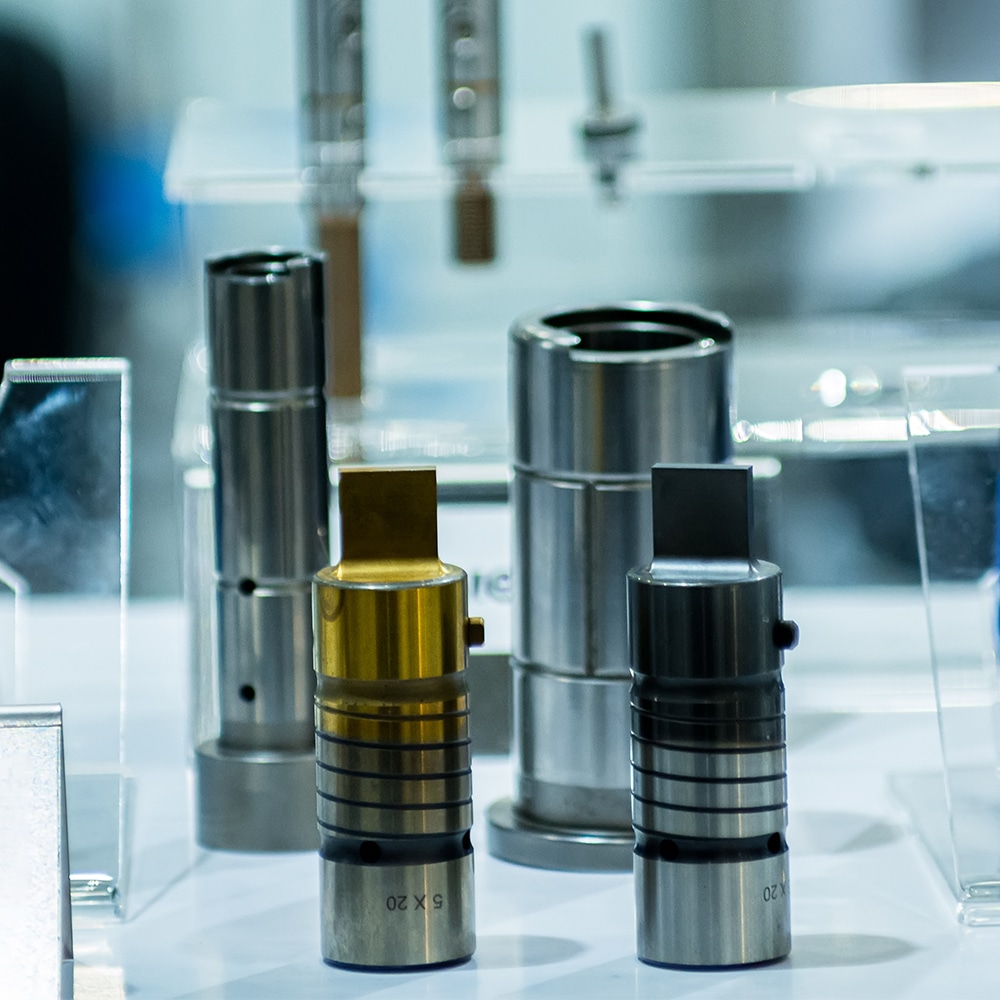
Engineered for steel and stainless parts that currently rely on WC thermal spray coatings:
- Pumps & fluid handling – pump shafts and sleeves, wear rings, impeller hubs, and seal hardware where sliding wear, mild erosion, and corrosion drive failures.
- Valves & flow control – stems, seats, plugs, balls, and cages that must move smoothly and resist galling in abrasive or corrosive media.
- Bearings & linear motion – journals, races, linear guides, and actuator rods where low friction and tight clearances are critical for motion control.
- Molds, dies & tooling – forming dies and mold components that migrated to WC coatings for life, but now struggle with friction, sticking, or brittle behavior.
- General wear components – shafts, pins, rolls, and wear pads where tungsten carbide coatings have become an expensive default rather than a true requirement.

Why Armoloy for Tungsten Carbide Coating Replacement?
Armoloy Thin Dense Chrome (TDC®) is engineered to do what most tungsten carbide coatings can’t: deliver high surface hardness with very low friction, consistent thickness, and easy rework on practical steel and stainless components.
- Lower friction, higher lubricity – TDC’s micronodular surface reduces contact area and holds lubricant, giving a very low coefficient of friction compared to typical WC coatings in sliding contact.
- Hard surface, tough core – Surface hardness in the ~72–78 Rc range on a steel or stainless core provides carbide-like wear performance without a fully brittle body.
- Thin, uniform deposits – Typical thickness of about 0.000025–0.0006″ (≈1–15 µm) protects clearances, balance, and surface finish without heavy grinding or dimensional rework.
- Strip, replate, repeat – Thin dense chrome can be stripped and replated, allowing you to return parts to the same engineered surface condition and extend core life instead of scrapping.
- Easier machining – You machine the base material, not a fully hard carbide body, then apply TDC near net shape—simplifying manufacturing and reducing tooling costs.
- Proven in demanding service – TDC is used globally on pumps, valves, bearings, molds, and oil & gas components where wear, friction, and corrosion must be controlled together.
Ready to Reduce Your Tungsten Carbide Dependence?
Share a print, spec, or failed tungsten carbide–coated part, and our team will help you evaluate whether Thin Dense Chrome is a suitable alternative.
- Free engineering consult on tungsten carbide replacement opportunities
- Guidance on where TDC can replace WC coatings—and where WC still needs to stay
- Support for prototypes, qualification runs, and production programs