
No—motion is elastic. Avoid lubricants in vacuum/clean environments; use coatings only on stops/seats if needed.
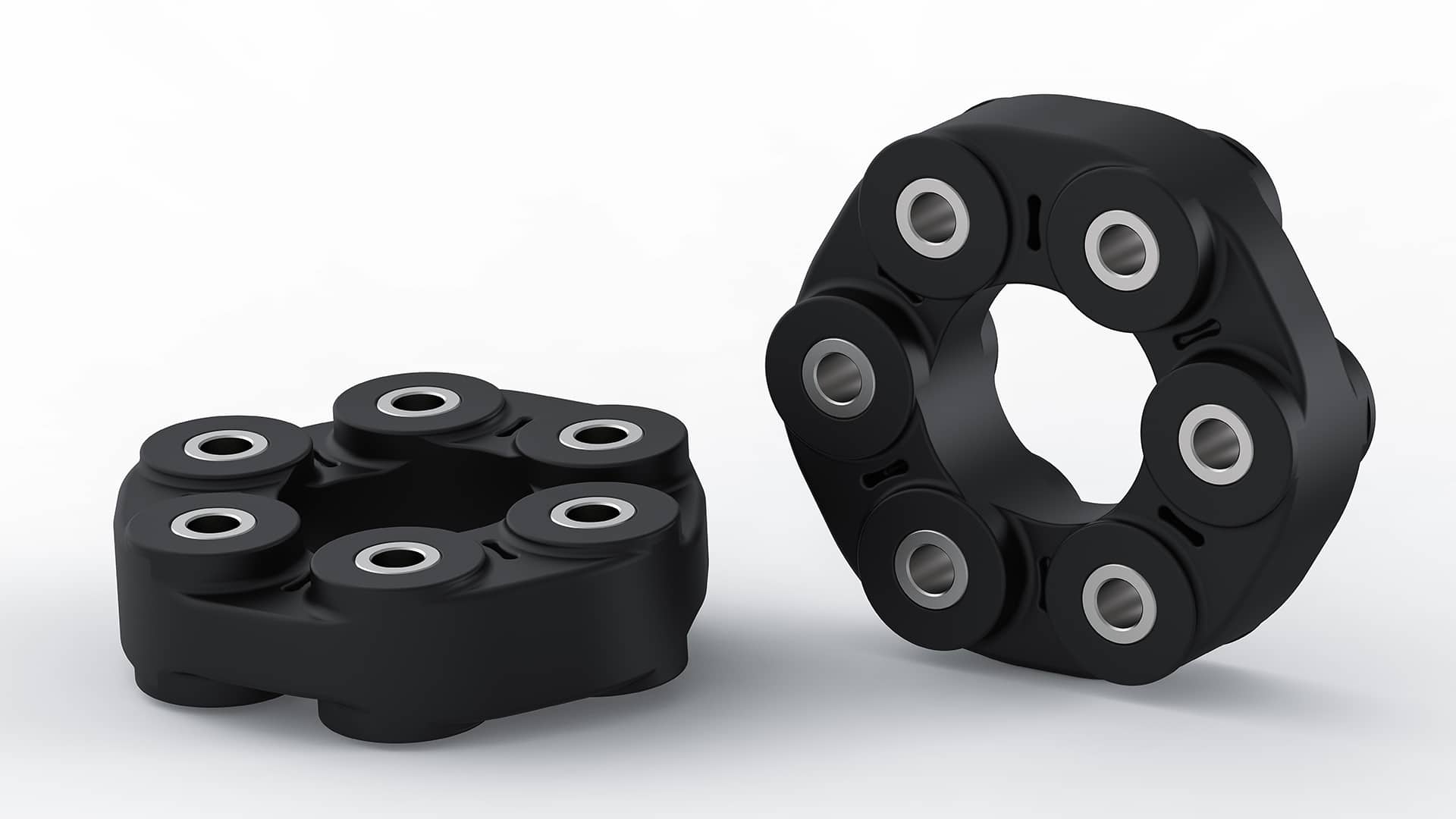
Industry Insights
Industry Insights
Flexure Bearings
Selection, Failures, Fixes & Coatings
What Are Flexure Bearings?
Flexure bearings guide motion via elastic deformation of thin elements—no rolling parts, no backlash, and near-zero friction within the elastic range. Common forms include notch/leaf hinges, cross-spring pivots, diaphragms, blade/torsion bars, and spiral flexure pivots. Range is limited, stiffness is directional, and life depends on strain amplitude, stress concentrations, and fatigue.
Typical uses: precision stages & metrology, optics/beam steering, vacuum/clean tools, micro-positioners, inertial sensors, compliant clamps, cryogenic mechanisms, high repeatability pivots in automation/robotics.
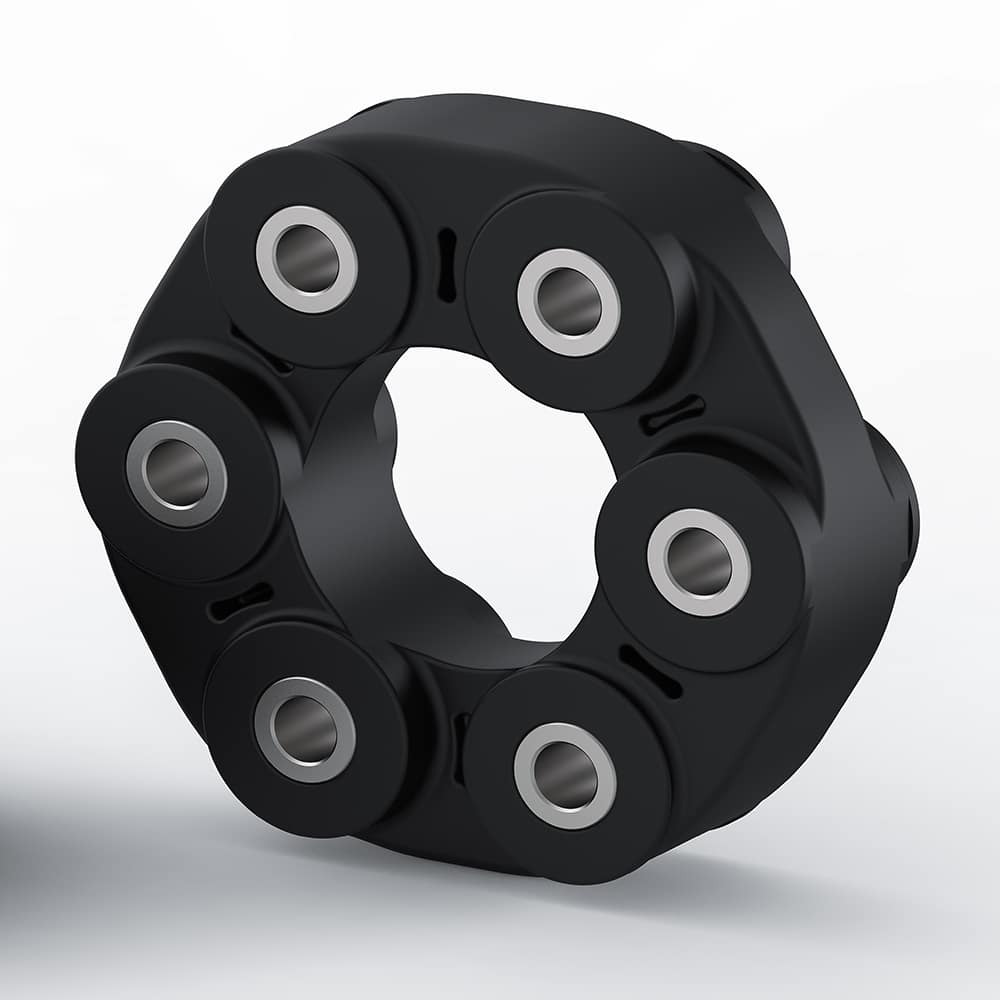
Selection Cheatsheet (Duty, Range, Strain, Environment)
- Required motion & stiffness: pick topology (notch hinge, cross-spring pivot, diaphragm, torsion bar, spiral pivot) that meets range and off-axis stiffness.
- Strain budget: size ligament thickness/length to keep max strain below fatigue limit at life target; minimize Kt (fillet radii, smooth blends).
- Environment: vacuum/cleanroom → no lube/particles; corrosive → stainless/Ti; cryo → material ductility & modulus change.
- Manufacturing: wire-EDM/laser/etch/precision milling; aim for low Ra and no recast; deburr & polish root surfaces.
- Coatings: apply to stops, seats, fasteners for corrosion/fretting; avoid flexing ligaments unless validated for fatigue.
Flexure Types — Quick Comparison
Choose the topology that fits your stroke, stiffness matrix, fatigue life, and environment.
Notch / Leaf Hinge
Small angleCompact
- Thinned ligament bends; zero backlash.
- Range: small angles; size for εmax below fatigue limit.
- Watch-outs: root stress; surface finish dominates life.
- Uses: micro-positioners, clamps, optics trim.
Cross-Spring Pivot
Moderate angleLow hysteresis
- Two crossed strips approximate a frictionless pivot.
- Range: moderate angles with good axial stiffness.
- Watch-outs: alignment tolerance; clamp fretting.
- Uses: balances, gimbals, metrology pivots.
Diaphragm Flexure
Small linearVacuum-friendly
- Thin disk bends for z-motion/tilt; no lube, no particles.
- Range: small strokes with excellent lateral stiffness.
- Watch-outs: edge stress; stroke limited by thickness/diameter.
- Uses: vacuum bellows alternatives, precision z-stages.
Torsion Bar / Blade
Small–moderate anglePredictable kθ
- Narrow bar twists for rotation; linear stiffness.
- Range: small–moderate; temperature shifts modulus.
- Watch-outs: shear fatigue; mean stress/creep at temp.
- Uses: sensors, compliant hinges, small pivots.
Spiral Flexure Pivot
Moderate angleDistributed strain
- Spiral ligaments spread strain for higher stroke than notches.
- Range: moderate angles in tight envelopes.
- Watch-outs: manufacturing complexity; root stresses govern life.
- Uses: compact scanners, space-constrained pivots.
Environment → Attributes Matrix
| Environment | Material / Treatment | Surface & Finish | Stops / Seats | Notes |
|---|---|---|---|---|
| Vacuum / Cleanroom | Stainless/Ti; avoid outgassing coatings on ligaments | Low Ra on roots; no debris/recast; electropolish optional | Hard chrome/Ni-P on stops & seats only | No lubricants; bakeout compatible |
| Corrosive / Washdown | 316L, 17-4PH H900, Ti; inert coatings on non-flexing faces | Passivate; protect edges; dry after wash | Deflectors; sealed fastener seats | Avoid jetting at thin ligaments |
| Cryogenic | Ti, austenitic SS; validate ductility at temperature | Polish to reduce micro-crack starters | Thermal relief at seats; avoid differential contraction traps | Modulus ↑, stroke ↓; re-check strain |
| High Temperature | Spring steels/Alloys with creep resistance | Edge conditioning; oxide management | Heat shields; isolation of stops | Check relaxation/creep on mean stress |
Common Failures & Diagnostics
Rapid Triage
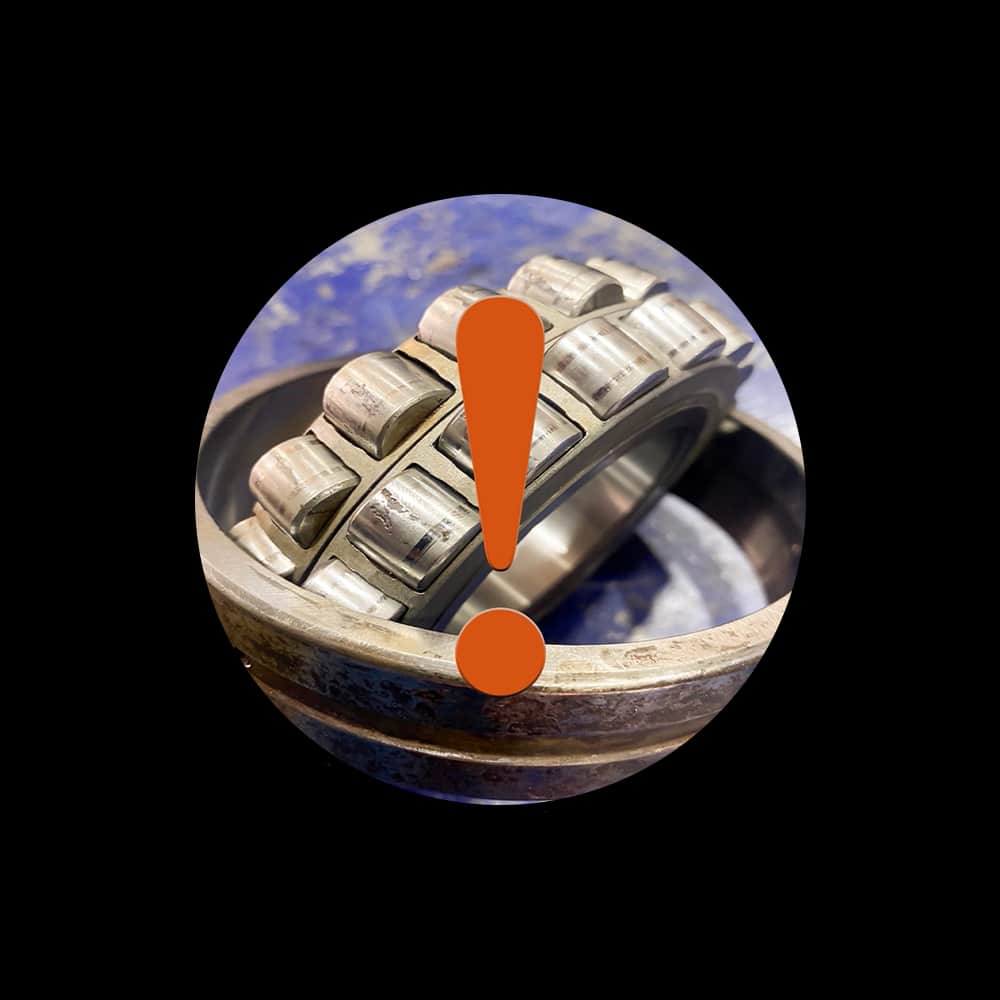
1) Fatigue Cracking at Ligament Root
Symptoms
Drift in zero/return position, audible snap, crack visible at root.
Likely causes
Strain above limit; sharp corners/recast; surface defects; mean stress bias.
Checks
FEA strain; fillet radius; Ra and EDM recast; shot/peen history; life duty cycle.
Non-coating actions
Increase ligament thickness/length; polish/electropolish; improve fillet; reduce range/mean stress.
When surface treatments help
Not primary—geometry and finish dominate fatigue.
2) Out-of-Plane Buckling / Cross-Axis Instability
Symptoms
Sudden stiffness loss, scraping at stops, asymmetric motion.
Likely causes
Thin ligaments, long spans, off-axis loads, thermal bow.
Checks
Euler buckling margin; cross-stiffness; temperature gradients.
Non-coating actions
Add anti-buckling ribs/stays; shorten span; increase thickness; mitigate off-axis loads.
When surface treatments help
N/A.
3) Fretting at Strip Clamps / Seats
Symptoms
Reddish debris at clamps, loss of zero, squeak/creak.
Likely causes
Micro-motion under vibration; inadequate clamp load/finish.
Checks
Contact pressure; finish; flatness; vibration exposure.
Non-coating actions
Increase clamp area; add serrations; change sequence/torque; isolate vibration.
When surface treatments help
Micro-textured chrome on seats can reduce adhesion once clamp is corrected.
4) Thermal Drift / Creep (Polymers)
Symptoms
Zero shifts with temperature/time, increased hysteresis.
Likely causes
Temperature-dependent modulus; viscoelastic creep.
Checks
Thermal model; soak tests; time-temperature superposition.
Non-coating actions
Switch to metal flexures; add temperature control; reduce mean stress.
When surface treatments help
N/A.
The Big Three: Corrosion, Damping/Tribology, Dimensional Stability
Flexures themselves run contact-free; surface treatments mostly apply to stops, seats, fasteners, and fixtures. Coatings don’t replace proper strain design or edge quality.
| Concern | What it means | Non-coating controls (first) | When coatings help | Notes |
|---|---|---|---|---|
| Corrosion resistance | Protect seats, stops, and fixtures from rust/chemicals | Material choice; passivation; purge/dry routines | Thin dense/micro-cracked chrome or Ni-P on non-flexing surfaces | Avoid coating ligaments unless fatigue-validated |
| Damping / Tribology | Lower friction/wear at rare hard-stops or clamps | Tune stop geometry; add compliant bumpers where allowable | Low-roughness chrome on stops/clamps reduces scuff | Do not contaminate clean/vacuum systems |
| Dimensional stability | Hold thickness, flatness, and edge radii at ligaments | Controlled machining/EDM; polish roots; metrology | Controlled-thickness coatings on seats only; re-measure | Edge quality dominates fatigue life |
Design Rules (Quick)
-
Keep strain low: choose thickness/length to meet life at duty cycle; derate for temperature & mean stress.
-
Shape for low Kt: generous fillets, smooth blends, avoid corners/recast; polish root surfaces.
-
Control cross-axis coupling: add ribs/stays; choose topology for needed stiffness matrix.
-
After processing: if surfaces are treated, don’t coat ligaments; re-measure thickness/flatness; re-qualify motion.
Frequently Asked Questions
Generally avoid: coatings can alter fatigue and crack initiation. If considered, validate on coupons for your strain/temperature.
Use topologies that distribute strain (spiral pivots, longer ligaments), or split motion into multiple stages.
Strain amplitude & mean stress, surface quality, temperature, and residuals. Edge quality dominates.
Case Snapshots
- Vacuum optic pivot drift — zero shifted after thermal cycles.
Actions: increased fillet radius, electropolished roots, added chrome on stops only, re-qualified stroke.
Outcome: stable zero over 200 thermal cycles (illustrative). - Clamp fretting on cross-spring pivot — debris at strip seats.
Actions: increased clamp area, micro-textured chrome on seats, torque sequence update.
Outcome: fretting eliminated in 6-week audit (illustrative).
Contact Armoloy
Have a failure photo, sound clip, or spec? Upload it and we’ll assess the issue and outline recommended next steps.
Request Information