
No. It is the free-end bearing and should see near-zero axial load. Provide a locating bearing elsewhere.
Industry Insights
Industry Insights
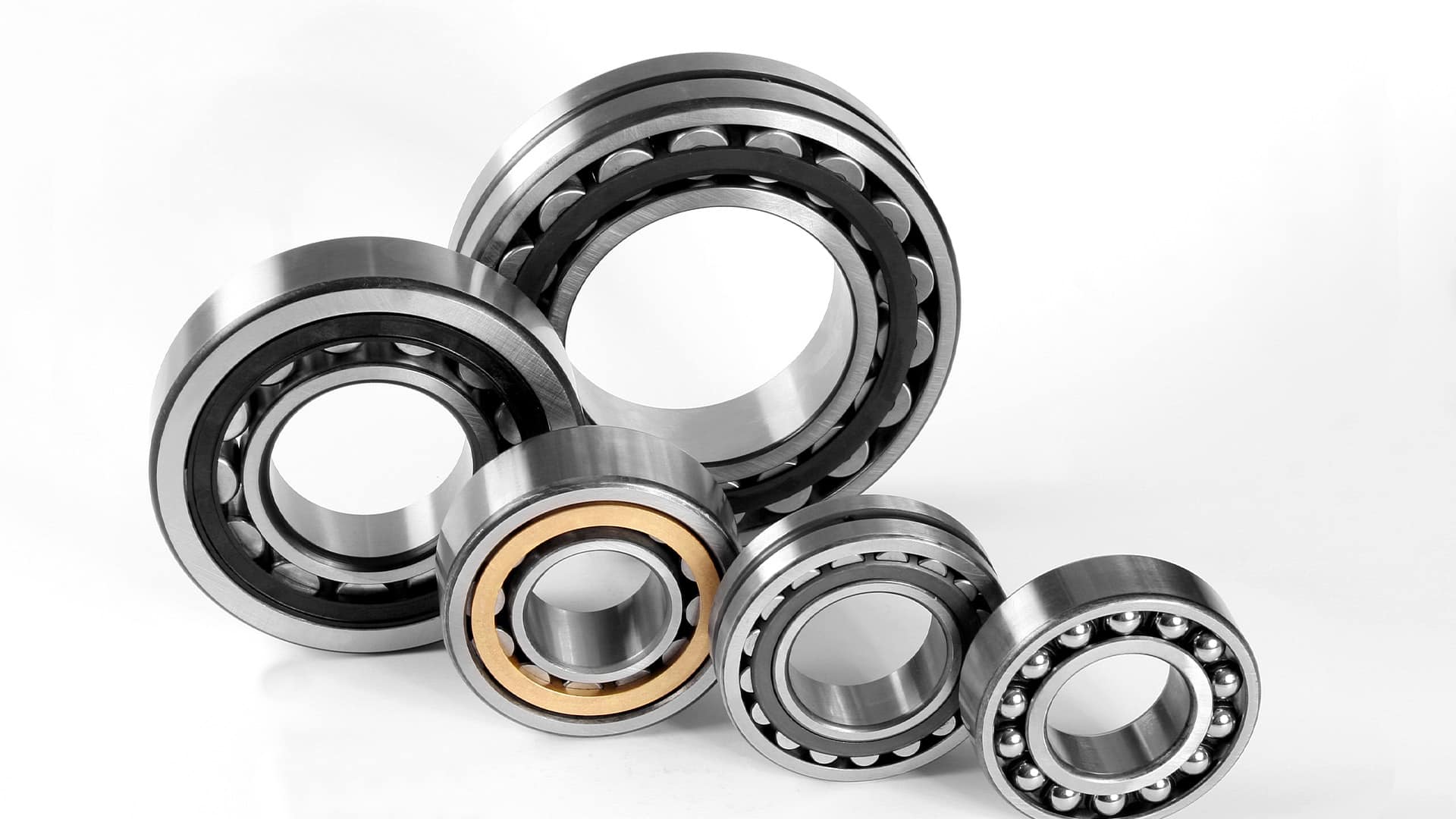
Toroidal Roller Bearing (CARB-type)
Selection, Failures, Fixes & Coatings
What Is a Toroidal Roller Bearing (CARB-type)?
A single-row roller bearing with toroidal raceway geometry that provides self-alignment and axial displacement (float) in one unit. It carries high radial load while letting the ring slide axially to absorb thermal growth. It is intended as the non-locating support—not for axial location or sustained axial load.
Typical uses: long shafts with thermal expansion (paper/steel mills, dryers), motors/generators, gearboxes and couplings where misalignment + float are needed, heavy industrial drives.
Selection Cheatsheet (Float, Alignment, Pairing, Environment)
- Use as the free end: CARB-type handles both misalignment and axial float—ideal where thermal growth is large.
- Pair correctly: Provide a locating bearing at the other support; do not try to “locate” with CARB.
- Respect limits: Verify allowable misalignment and total axial travel at operating temperature.
- Housing design: Seats must not block axial slide; avoid shoulders/clamps that trap a ring.
- Environment: Plan sealing/deflection; validate grease/oil chemistry (cleaners, moisture, dust).
- Surface treatments: Use for corrosion/fretting/abrasion; control thickness so float/clearance geometry remains in spec.
Environment → Attributes Matrix
| Environment | Material / Coating | Position / Function | Fits / Mounting | Sealing | Lubricant |
|---|---|---|---|---|---|
| Long shafts (motors/generators) | Low-roughness raceways; optional corrosion-resistant surfaces | CARB at free end; locating bearing on opposite end | Interference on rotating ring; seats free for axial slide | Labyrinths or shields | Grease or oil mist depending on speed/heat |
| Paper/steel mills (heat & misalignment) | Through-hardened surfaces; wear/corrosion-resistant coatings | Free end (float + alignment) | Robust shoulders; verify misalignment within limits | Deflectors + debris guards | Filtered circulating oil preferred for heat removal |
| Washdown / Food | Chromium-family or Ni-P (validated); tight thickness control | Free end; ensure float isn’t blocked by seals/shims | Check post-coat geometry; confirm axial travel | Contact seals + external deflectors; protect lips from jets | NSF H1 grease validated vs. cleaners & temp |
| Abrasive / Dusty | Hard, low-roughness surfaces; micro-textures optional | Free end; avoid axial trapping from shields/guards | Interference on rotating ring; shoulder geometry controlled | Labyrinths + deflectors; purge paths | Grease with sealing behavior; set purge intervals |
| High-speed, moderate load | Precision raceways; controlled cage | Free end; verify dn and heat rise | Alignment & runout controls to avoid edge contact | Low-drag shields or non-contact sealing | Low-bleed grease or oil (mist/air-oil) |
Common Failures & Diagnostics
Rapid Triage

1) Axial Float Blocked (trapped ring)
Symptoms
Rising temperature with thermal growth, axial marks at seats, noisy operation.
Likely causes
Shoulders/shims or seals clamp a ring; coating thickness reduced clearance; wrong locating scheme.
Checks
Confirm which end is locating; measure free axial travel cold/hot; inspect for mechanical stops.
Non-coating actions
Remove traps; redesign seats/seals; relocate locating function to the other end.
When surface treatments help
Not a primary fix—geometry/function first.
2) Misalignment Beyond Rating (edge contact)
Symptoms
Edge spalling on raceways, heat, reduced life.
Likely causes
Support deflection, bent shaft, housing distortion exceeds bearing limit.
Checks
Measure misalignment; blue check contact pattern; verify mounting rigidity.
Non-coating actions
Increase stiffness; reduce misalignment; ensure correct series selection.
When surface treatments help
Secondary—won’t correct geometry; can reduce scuffing once alignment is within limits.
3) Seat Creep / Micro-Slip
Symptoms
Polished bands or dark oxide at ring seats; positional drift.
Likely causes
Insufficient interference on rotating ring; vibration; thermal cycling.
Checks
Fits vs. catalog; surface finish; witness marks; temperature profile.
Non-coating actions
Increase interference; improve finishes; add mechanical locks.
When surface treatments help
Not a primary fix—address fit first.
4) Lubrication Starvation / Smearing
Symptoms
Smear marks, rising temperature, discoloration.
Likely causes
Viscosity too low at operating temp; grease channeling; high seal drag.
Checks
Viscosity index; relube interval; flow path to contact zone.
Non-coating actions
Increase viscosity or move to oil/air-oil; reduce drag; improve flow.
When surface treatments help
Low-roughness/micro-textured chrome can reduce scuffing once film is adequate.
5) Contamination / Abrasive Wear
Symptoms
Gritty feel, debris, accelerated wear.
Likely causes
Ingress via inadequate sealing/deflection; poor filtration; wash jets at seals.
Checks
Ingress routes; seal condition; filter analysis.
Non-coating actions
Upgrade sealing/labyrinths; improve filtration; purge plans.
When surface treatments help
Hard, low-roughness surfaces extend life once contamination is controlled.
Corrosion, Lubricity, Dimensional Stability
Apply coatings for surface-driven issues (corrosion, fretting, abrasion). Coatings don’t replace the correct free-end/locating scheme, float clearance, or alignment.
| Concern | What it means | Non-coating controls (first) | When coatings help | Notes |
|---|---|---|---|---|
| Corrosion resistance | Protect raceways and seats from rust in wet/caustic service | Seals/deflectors; jet management; compatible grease; drying | Thin dense chrome, micro-cracked chrome, Ni-P (validated) | Re-measure geometry; confirm float isn’t reduced by thickness |
| Lubricity | Stable film under line contact and misalignment | Viscosity @ temp; adequate flow; minimize seal drag | Low-roughness or micro-textured chrome reduces smearing | Coatings complement—not replace—lubrication strategy |
| Dimensional stability | Maintain ID/OD/runout so misalignment & axial travel remain within limits | Verify free-end travel cold/hot; avoid axial traps; control fits | Controlled-thickness coatings; check after processing | Small thickness shifts can affect available float |
Fits, Seating & Float (Quick Rules)
-
Rotating ring = interference; stationary ring may be slip. Control finish and shoulder geometry.
-
Do not clamp axially: seats/seals must not trap the ring—preserve axial travel in both directions.
-
Pair with a locating bearing at the opposite end; CARB is the free-end only.
-
After coatings: re-measure bore/OD/runout; confirm axial travel and misalignment capacity remain within limits.
Frequently Asked Questions
Both self-align. CARB-type also allows axial displacement in the bearing, making it ideal as the non-locating support.
Thermal growth has nowhere to go → heat, edge loading, premature failure.
Most are open; sealing is typically done at the housing with labyrinths/deflectors.
They can. Control thickness and re-measure ID/OD/runout; verify axial travel after processing.
Case Snapshots
- Paper machine dryer section — Thermal bind at expansion end.
Actions: replaced CRB free-end with CARB-type; cleared axial traps; switched to circulating oil.
Outcome: temperature drop ~15 °C; alignment stabilized; fewer interventions. - Generator drive — Edge spalling from misalignment.
Actions: moved free end to CARB-type; verified misalignment within rating; added labyrinth seals.
Outcome: spalling eliminated; MTBF increased.
Contact Armoloy
Have a failure photo, sound clip, or spec? Upload it and we’ll assess the issue and outline recommended next steps.
Request Information