
Concentric/adapter locking generally runs truer and helps balance at speed compared with set-screw or eccentric.
what you need to know
what you need to know
Y-Bearings (Pillow Blocks & Flanged Units)
Selection, Failures, & Fixes
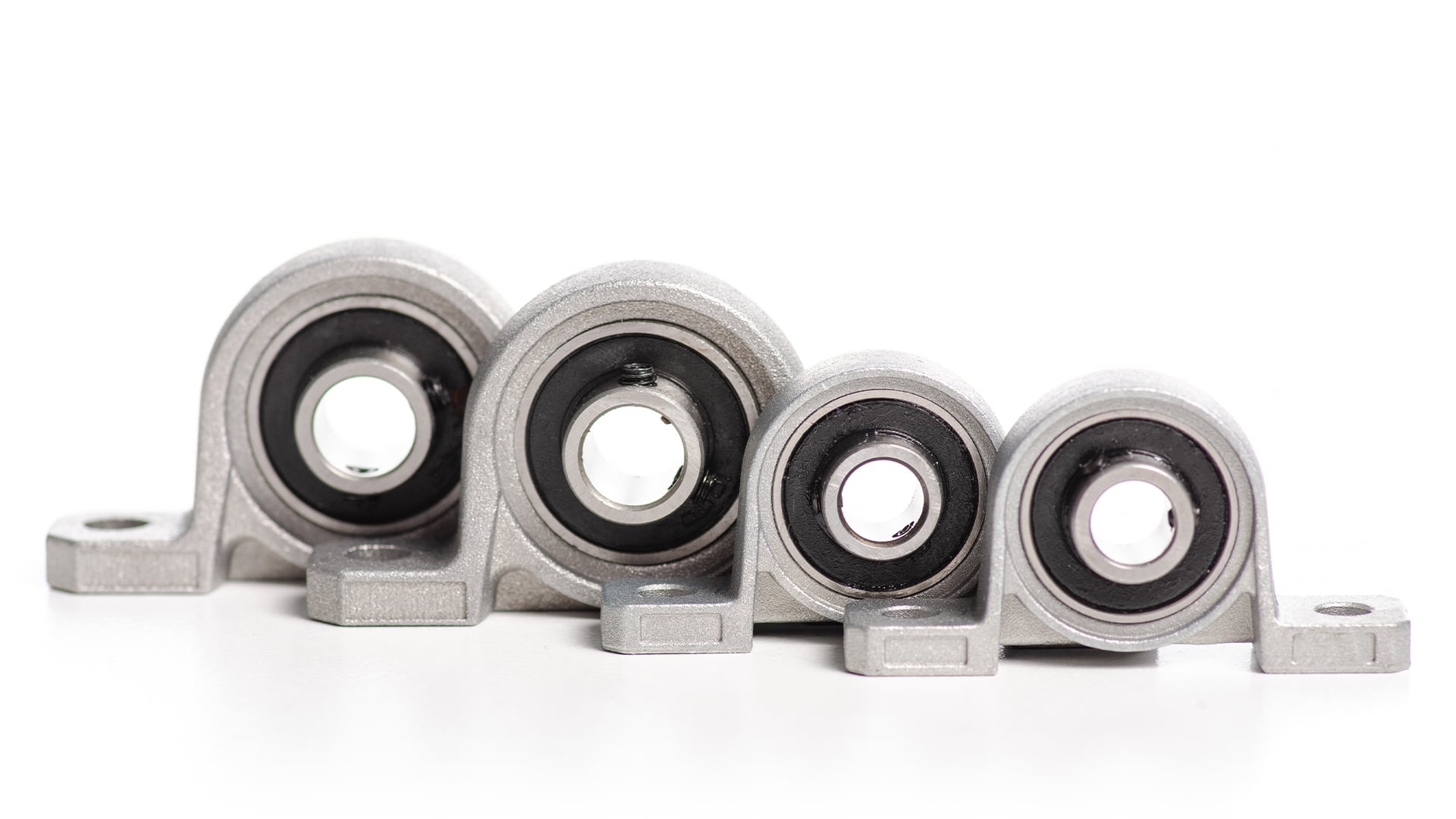
What Is an Insert / Y-Bearing (Mounted Unit)?
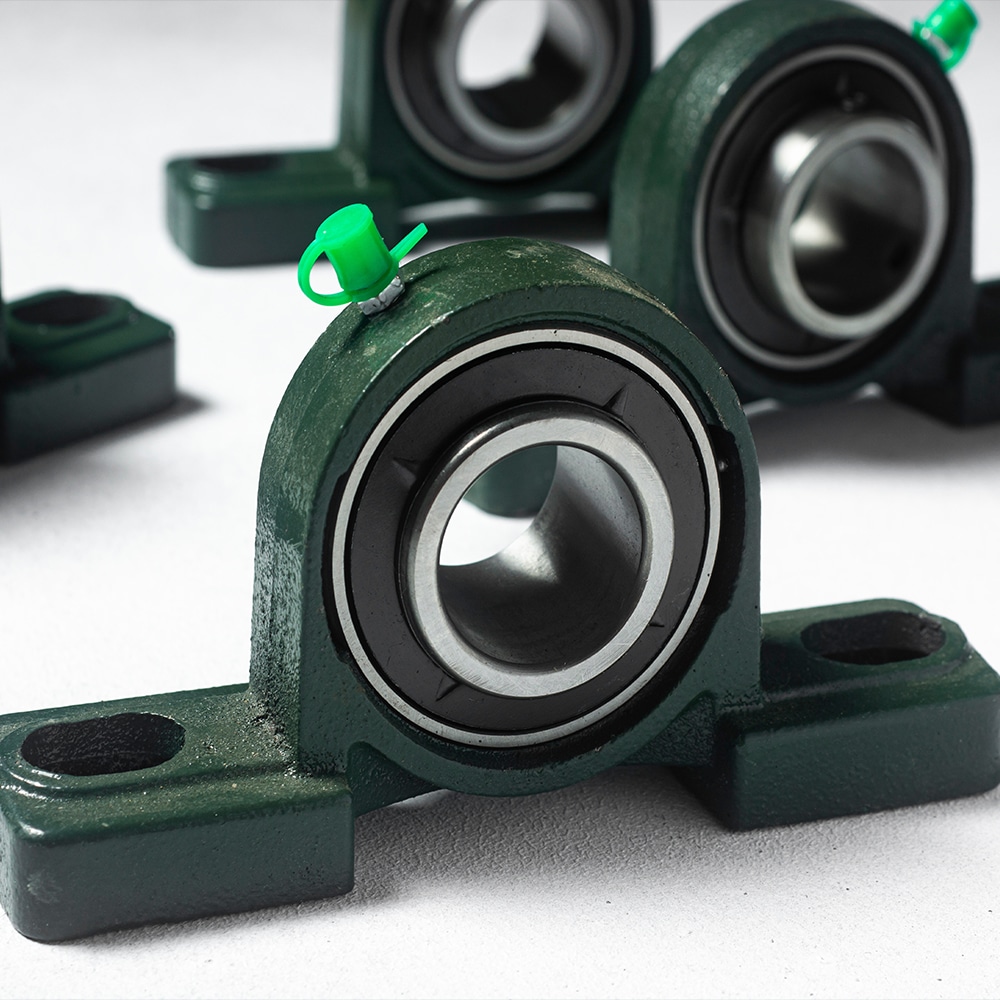
A deep-groove ball bearing insert with a convex (spherical) outer diameter that seats in a pillow block or flange housing. Primarily supports radial loads with limited axial capacity, while allowing small self-alignment via the spherical seat. Inner-ring locking can be set-screw, eccentric, or concentric/adapter depending on speed and vibration.
Typical uses: conveyors, food & beverage equipment, packaging/washdown machinery, agricultural machinery, fans/blowers, bulk handling, general factory MRO.
Selection Cheatsheet (Load, Locking & Environment)
- Radial load dominant; small misalignment: insert/Y-bearing is appropriate; verify misalignment rating.
- Locking choice: set-screw for simplicity/MRO; eccentric for quick axial location; concentric/adapter for better balance at speed and reduced shaft damage.
- Harsh washdown/caustic: choose sealed/hygienic housings, deflectors, cleaner-compatible H1 grease, and corrosion-resistant surfaces.
- High vibration: prefer concentric/adapter locking; check for creep and consider mechanical stops.
- Axial load significant: move to angular-contact or tapered roller in a housed assembly.
Environment → Attributes Matrix
| Environment | Material / Coating | Clearance | Shaft / Seat | Sealing | Lubricant |
|---|---|---|---|---|---|
| Washdown / Food | Stainless or coated rings; hygienic housings | C3 (absorbs thermal + seat effects) | Concentric/adapter preferred for speed; ensure spherical seat freedom | 2RS + deflectors; avoid direct jets on seal lips | NSF H1 grease validated vs. cleaners/temps |
| Abrasive / Dusty | Coated rings; hard, low-roughness surfaces | C3 | Check shaft finish; add slingers/labyrinths | 2RS or shield + labyrinth | Grease with strong sealing behavior |
| High-Humidity / CIP | Chromium-family or Ni-P coatings; stainless balls | C3 | Concentric/adapter; torque to spec; verify seat drainage | Sealed units + external deflectors; drain-friendly housings | H1 grease with cleaner & heat compatibility |
| Medium Speed / Balanced Shafts | Through-hardened steel rings | C0–C3 (match heat & speed) | Concentric/adapter locking for balance | Shields or low-drag seals | Low-bleed grease; confirm dn limits |
| Heavy Vibration | Coated contact surfaces; robust housing | C3 | Concentric/adapter; consider mechanical stops; check creep | 2RS + slingers/deflectors | Grease with film persistence under vibration |
*Shaft fit typically slip + locking; verify OEM guidance. Ensure spherical seat can align freely.
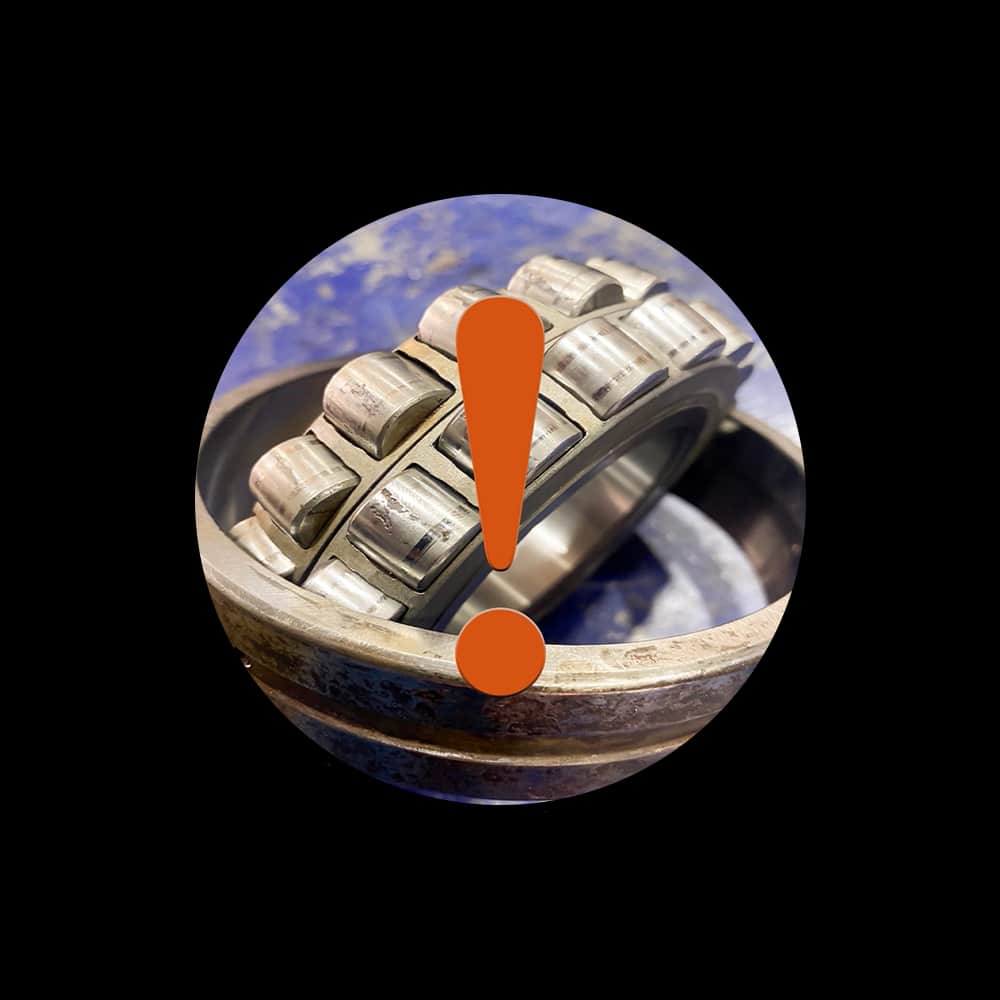
Common Failures & Diagnostics
Rapid Triage
1) Corrosion (pitting/crevice/rust staining)
Symptoms
Brown/red staining at seals and housings; rough running; noise after washdown cycles.
Likely causes
Ingress from jets; aggressive cleaners; inadequate drying; marginal grease film.
Checks
Seal condition/deflectors; seat drainage; cleaner MSDS/pH; jet angles aimed at seals.
Non-coating actions
Upgrade sealing/deflectors; adjust wash practices; select H1 grease compatible with cleaners; relube purge.
When surface treatments help
Chromium-family or Ni-P surfaces to resist initiation/crevice attack on rings/shoulders.
Won’t solve
Chronic misalignment, open ingress paths, or under-spec’d seals.
2) Grease Washout / Starvation
Symptoms
Emulsified/absent grease, rising torque, noise after cleaning.
Likely causes
Direct jetting at seal lips; incompatible grease; insufficient post-wash relube.
Checks
Seal lip integrity; cleaner compatibility; relube intervals; purge results.
Non-coating actions
Protect seals from jets; choose cleaner-compatible H1 grease; relube after wash to purge moisture/chemicals.
When surface treatments help
Low-roughness, micro-textured raceways may support film retention once practices are fixed.
Won’t solve
Missing relube or persistent jetting at seals.
3) Creep at Shaft (inner-ring micro-movement)
Symptoms
Polished bands/black oxide dust near inner ring; positional drift; setscrews loosening.
Likely causes
Insufficient locking torque; shaft surface too hard/smooth; thermal cycling; high vibration.
Checks
Shaft finish/hardness; locking type vs. speed; torque records; mechanical stops.
Non-coating actions
Use concentric/adapter locking for speed; apply torque per OEM; consider collars/stops; correct shaft finish.
When surface treatments help
Generally not a substitute for proper locking; may reduce fretting once creep is eliminated.
Won’t solve
Loose/incorrect locking or severe thermal mismatch.
4) Abrasive Wear / Contamination
Symptoms
Gritty sound, rising torque, particulate in grease; accelerated seal wear.
Likely causes
Dust/slurry ingress; ineffective sealing; missing slingers/labyrinths.
Checks
Ingress points; seal wear pattern; presence of fines; upstream shielding.
Non-coating actions
Upgrade to 2RS + deflectors; add labyrinths; improve filtration; schedule purge relube.
When surface treatments help
Hard, low-roughness surfaces can reduce cutting when sealing is adequate.
Won’t solve
Open ingress or unfiltered contaminants.
5) Seat Binding / Lost Self-Alignment
Symptoms
Edge stress marks, heat, noise; misalignment persists despite “self-aligning” insert.
Likely causes
Spherical seat clamped or contaminated; housing/insert mismatch; improper mounting.
Checks
Inspect seat freedom/clearance; verify housing type and insert match; check torque on housing caps.
Non-coating actions
Restore seat freedom; clean/grease seat as specified; use correct housing; reduce misalignment.
When surface treatments help
Not a primary remedy—fix geometry and seat freedom first.
Won’t solve
Structural misalignment or wrong housing/insert pairing.
The Big Three: Corrosion, Lubricity, Dimensional Stability
Apply coatings when they address a surface-driven failure mechanism (corrosion, fretting, abrasion). Do not apply coatings as a substitute for proper locking, fits, sealing, or alignment.
| Concern | What it means | Non-coating controls (first) | When coatings help | Notes |
|---|---|---|---|---|
| Corrosion resistance | Resist rust/chemical attack in washdown/CIP | Sealing & deflectors, jet angle, drying, compatible H1 grease | Thin dense chrome (nodular), micro-cracked chrome, electroless nickel (Ni-P) | Check cleaner pH/chemistry; verify food/biocompatibility |
| Lubricity | Low friction & film retention under vibration/oscillation | Correct locking/fits; relube after wash; choose grease with good film persistence | Micro-textured hard chrome can reduce fretting/false brinelling | Coatings complement—don’t replace—mechanical discipline |
| Dimensional stability | Preserve geometry/clearance; maintain seal gaps & balance | Verify seat freedom; torque locking per OEM; avoid shaft damage | Controlled-thickness coatings; verify runout & balance post-coat | Concentric locking helps at speed; check preload/drag if sealed |
Case Snapshots
- Hygienic conveyor (washdown) — Corrosion & noise after 6 weeks.
Actions: sealed hygienic housings, deflectors, H1 grease, coated rings.
Outcome: >3× interval to first service; noise eliminated post-wash. - Packaging line idler (vibration) — Inner-ring creep with set-screws.
Actions: switched to concentric locking, recorded torque, added stop collar; micro-textured raceways.
Outcome: shaft scarring stopped; positional drift resolved.
Frequently Asked Questions
Often not. You still need proper sealing/deflectors, cleaner-compatible H1 grease, and good rinse/dry practices.
Coatings can reduce corrosion and fretting, but they won’t prevent washout caused by direct jetting or incompatible grease.
Axial capacity is limited. For substantial thrust, use angular-contact or tapered roller solutions in housed units.
Contact Armoloy
Have a failure photo, sound clip, or spec? Upload it and we’ll assess the issue and outline recommended next steps.
Request Information