
application insights
application insights
Injection Stretch Blow Molding
WHAT IS STRETCH BLOW MOLDING
Did You Know?
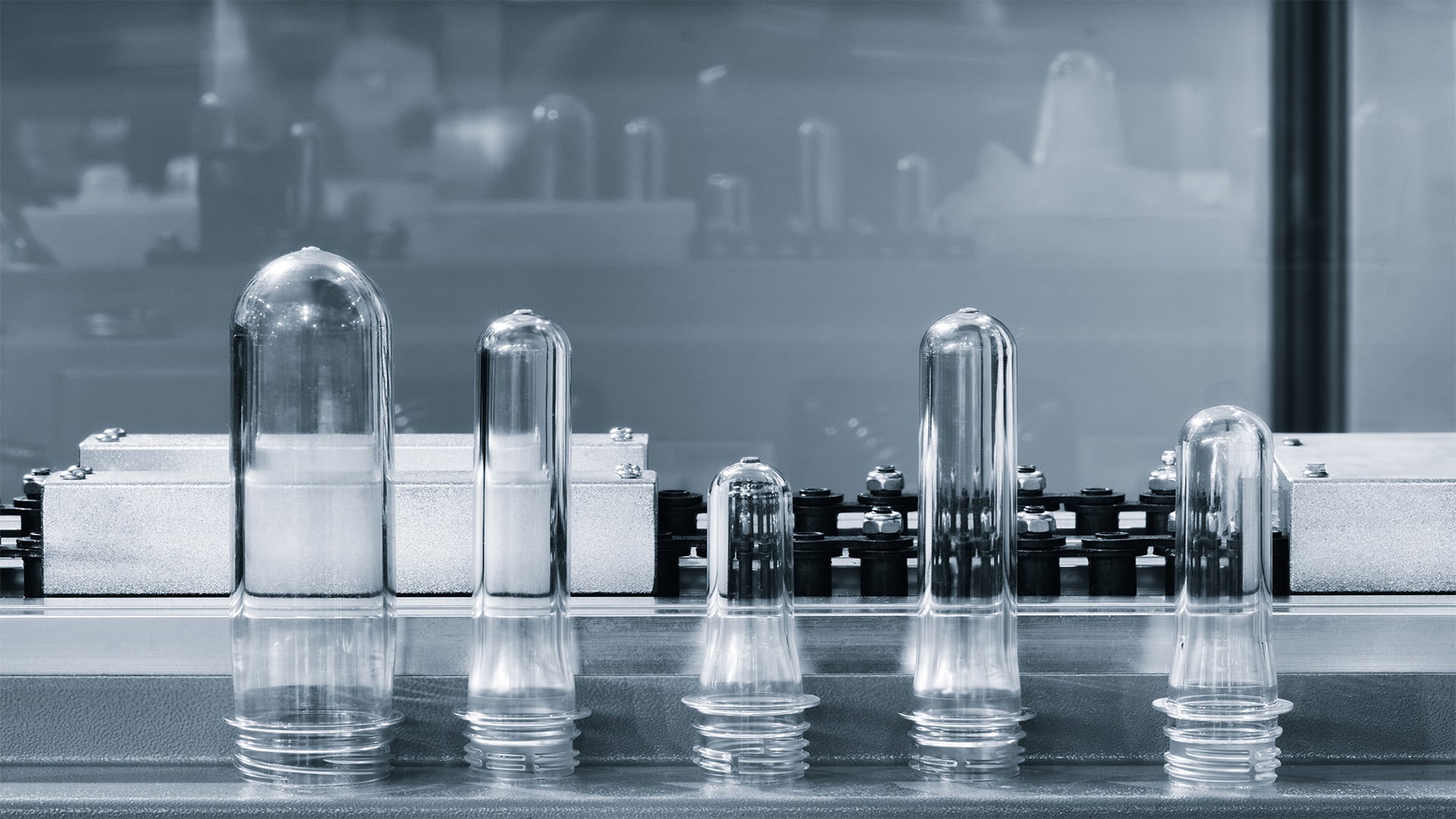
Injection Stretch Blow Molding (ISBM) forms hollow plastic containers by first injection‑molding a preform, then reheating, axially stretching, and blowing it in a cooled mold to create a biaxially oriented container. Biaxial orientation improves clarity, stiffness, and gas barrier—defining modern PET beverage packaging.
At-A-Glance Facts:
- Main families: 1‑step (inject‑condition‑stretch‑blow on one machine), 2‑step (reheat stretch blow from cooled preforms), and 1.5‑step hybrids
- Where used: Water, CSD, juices, edible oils, dairy, and many PET jars; ISBM is the dominant route for PET bottles
- Why PET: Biaxial orientation gives light‑weight, high top‑load, and better CO₂/O₂ barrier relative to non‑oriented articles
Process Variants
What changes, what stays the same
1‑step ISBM
Preforms are injected, temperature‑conditioned while still on the machine, then stretch‑blown—useful for wide‑mouth jars, specialty shapes, and lower volumes.
2‑step (Reheat Stretch Blow)
Preforms are cooled, stored, then IR‑reheated, stretched with a stretch rod, and blown on a rotary wheel for high throughput; the reheating aims just above PET Tg (~75 °C) to enable orientation.
1.5‑step
Hybrid lines inject more preforms than blow cavities and use a “cool‑parison” transfer, merging some advantages of 1‑ and 2‑step in a compact layout.

How It Works
1. Preforms are unscrambled and IR‑reheated to a tailored axial/hoop temperature profile
2. A stretch rod extends the preform axially while pre‑blow starts inflation
3. High‑pressure blow expands the preform to the mold walls (biaxial orientation)
4. Cooling fixes shape; bottle is ejected for downstream handling. Typical high‑pressure is in the ~35–40 bar range for many PET bottles
Typical Defects (and where they come from)
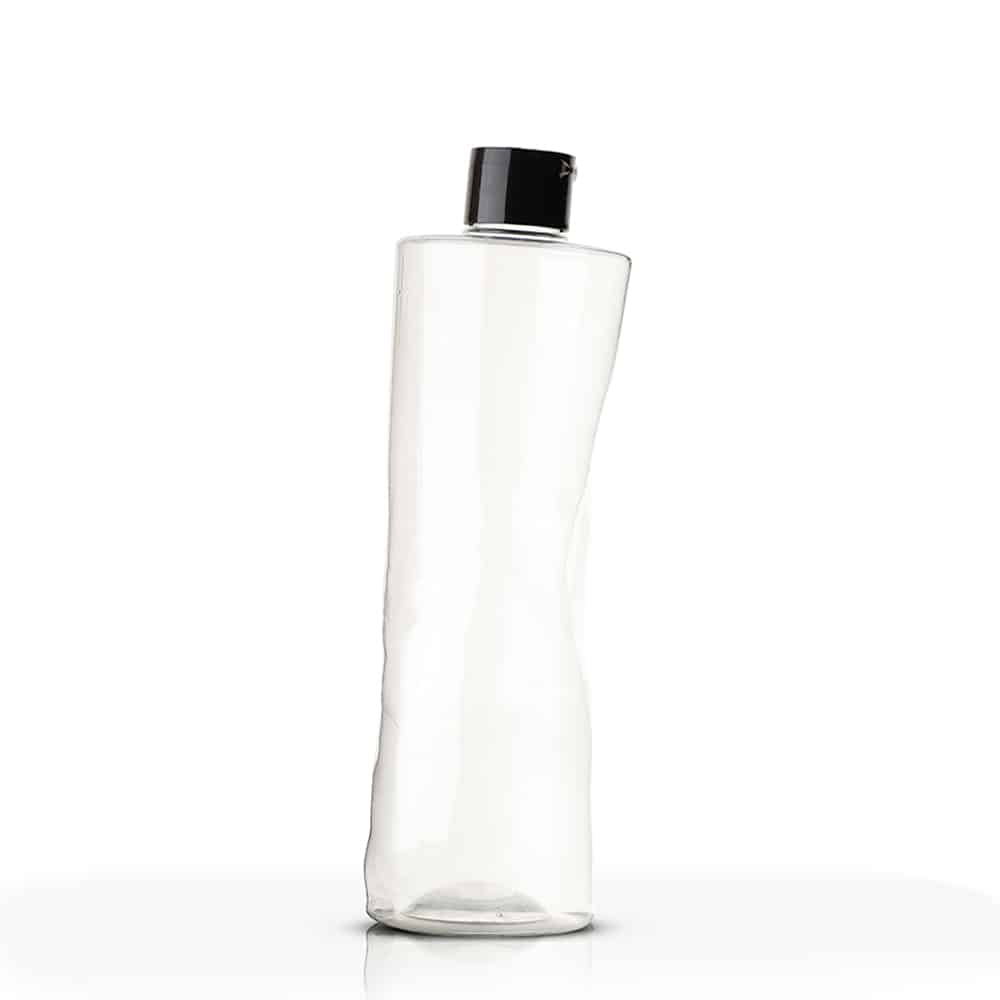
- Pearlescence / whitening: Over‑stretch or too‑cold material during drawing
- Haze: Improper reheat profile or insufficient orientation
- Base stress‑cracking (CSD): Concentrated stress in amorphous base/gate zones aggravated by load, environment, or handling. Dry resin (<0.005% moisture) and proper distribution help minimize risk
Energy & throughput (air matters)
Modern ISBM platforms employ multi‑stage air recycling to route exhaust high‑pressure air to pre‑blow/pneumatics, cutting HP air use by ~20% in some designs. Utilities programs document additional savings at scale with recovery retrofits
Surface Engineering Options
Siloed by what you’re seeing on the tool (symptoms) so you can choose the right surface solution.
Start with the question: did the metal fail, or is it failing?
In injection stretch blow molding, symptoms like sticking on core rods/stretch rods, scuffing on neck rings, wear on sealing/parting features, and heat-driven seam or clarity defects are the bridge between performance issues and root cause.
Metal failures we target
- Sliding wear / scuffing on contact interfaces
- Galling on high-load sliding surfaces
- Edge wear / geometry loss on critical sealing features
- Corrosion / pitting (material- and chemistry-dependent)
Performance failures we target
- Sticking / adhesion / buildup that disrupts cycle consistency
- Cosmetic defects (scuff, haze, marks tied to tool contact)
- Frequent cleaning / short maintenance intervals
- Heat-related quality issues (hot spots, seams, clarity/finish)
Important: “Armoloy-available treatments” are what we provide. “Other industry options” are common alternatives that may be supplied by other providers.
| What you’re seeing (symptoms) | Likely failure mode | Armoloy-available treatments | Other industry options (not offered by Armoloy) | Benefit focus |
| Sticking on core rods or stretch rods; material pickup; higher ejection force; cycle-to-cycle variability | Friction + adhesion (buildup) on sliding/contact surfaces; sometimes roughness or chemistry accelerates pickup | Electroless Nickel + PTFE (EN-PTFE) (where specified)
|
DLC (PVD/PACVD)
|
Performance failures
Sticking, downtime, cycle stability |
| Scuffing on neck rings / sealing features; surface marks tied to tool contact; wear tracks in high-load zones | Adhesive wear (galling) + sliding wear; geometry change can amplify cosmetic defects and sealing issues | Thin Dense Chrome (TDC)
|
CrN (PVD)
|
Metal + performance
Less wear/scuff, steadier finish |
| Edge wear on vents, sealing lands, or parting features; loss of definition leading to flash, seam issues, or inconsistency | Abrasive wear and geometry loss on sharp/high-contact edges | Thin Dense Chrome (TDC)
|
Hard PVD films (e.g., CrN variants)
|
Metal failures
Wear mitigation / geometry retention |
| Staining, haze, pitting, or corrosion marks after cleaning/washdown; contamination-sensitive surfaces | Corrosion initiation + roughness/buildup sites; chemistry + moisture accelerate attack | Electropolish + passivation (where applicable)
|
ASTM A967 passivation (industry standard process)
|
Metal + performance
Corrosion control & cleanliness |
| Hot spots, seam/parting integrity issues, clarity or finish defects tied to thermal imbalance | Thermal management limitation (heat extraction and stability), not always solved by a coating alone | Surface engineering consult
|
High-conductivity copper alloys (e.g., MoldMAX® / AMPCOLOY®)
|
Performance failures
Quality stability / seam integrity |
How to use this section: Tell us the symptom, where it shows up (neck rings, core rods, stretch rods, sealing/parting features), the resin/additives, and your dimensional constraints. We’ll validate the best Armoloy-available treatment—or point you to a proven industry alternative when that’s the better engineering call.