

Armoloy Specifications
Armoloy Specifications
ASTM B568
Standard Test Method for Measurement of Coating Thickness by X-Ray Spectrometry
Armoloy Specifications
What is ASTM B568?
The standard outlines how X-ray fluorescence (XRF) or X-ray emission techniques can be used to determine coating thickness quickly, accurately, and without damaging the sample. It is especially useful in quality assurance, process control, and research applications where coating precision is critical.
ASTM B568 applies to coatings such as chromium, nickel, gold, silver, zinc, tin, and cadmium.
The test is valuable when coatings are used for corrosion protection, conductivity, solderability, or aesthetic finishes, and must be applied within tight tolerance ranges.
The Role of ASTM B568 in Chromium and Nickel Coatings
Chromium Coatings
Chromium coatings—including thin dense chrome and decorative chrome—require precise thickness control to balance hardness, wear resistance, and corrosion protection. ASTM B568 enables in-process and final inspection measurements that ensure uniform coverage without exceeding tolerance limits that could lead to brittleness or dimensional change.
It is particularly important in aerospace, injection molding, and fluid handling components where tight dimensional control is essential.
Nickel Coatings
Nickel coatings—especially electroless nickel and electrolytic nickel—are often used for their corrosion resistance and dimensional stability. ASTM B568 allows for:
- Measuring deposit thickness over complex geometries
- Verifying multilayer builds (e.g., chromium over nickel)
- Ensuring uniform plating in electronics and precision components
Because nickel coatings often require specification to the micron or sub-micron level, X-ray-based measurement provides an efficient, lab-grade solution to validate production standards.
ASTM B568 Testing Methodology & Results
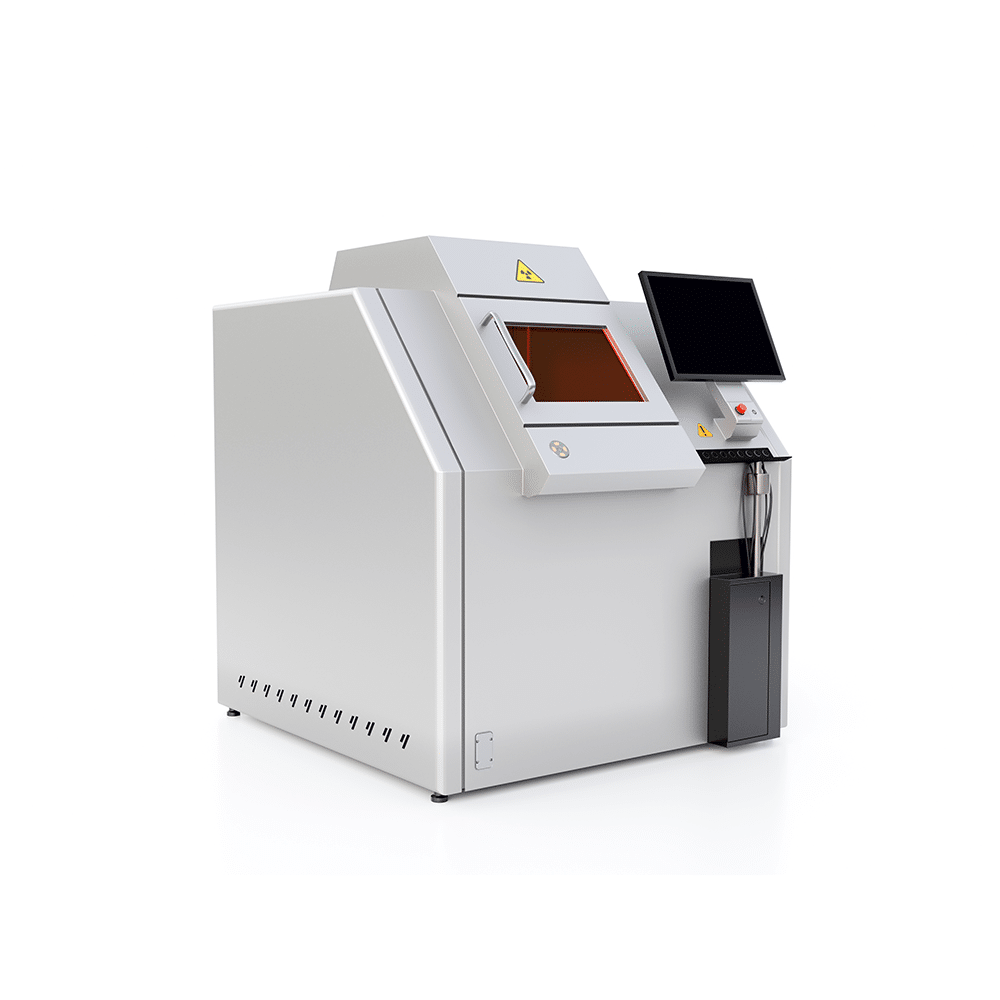
The method relies on X-ray fluorescence spectrometry, a technique in which a beam of X-rays is directed at the coated sample. This causes atoms in the coating to emit secondary X-rays (fluorescence), which are detected and analyzed to determine the elemental composition and thickness of the coating.
How It Works:
- A known-energy X-ray source excites atoms in the coating
- The sample emits characteristic X-rays, which are captured by a detector
- The intensity of the detected signal correlates with coating thickness based on pre-calibrated standards
Key Parameters:
- Elemental composition of both coating and substrate must be known
- Calibration curves or standard reference materials (SRMs) are used for accuracy
- Can measure layers as thin as a few nanometers and as thick as hundreds of microns
- Works best for flat or slightly curved surfaces and metallic layers
Types of Coatings Measured:
- Single-layer coatings (e.g., nickel on steel)
- Multilayer coatings (e.g., gold over nickel over copper)
- Alloyed coatings (e.g., electroless nickel-phosphorus)

Industries that Use ASTM B568
- Aerospace: Used to validate thickness of critical wear-resistant or anti-corrosion coatings on turbine blades, landing gear, and fasteners—especially when tight tolerances matter.
- Automotive: Measures plating on fuel injectors, pistons, and connectors for performance and longevity.
- Medical Devices: Non-destructive evaluation is critical for implantable and surgical tools that require biocompatible coatings like BIO-TDC or ME-92.
- Oil and Gas: Ensures protective coatings (like nickel-phosphorus) are applied to downhole components or valves to withstand corrosive environments.
- Semiconductors: Essential for gold, silver, and nickel coatings on circuit boards, connectors, and microchips, where layers may be only microns thick.
Benefits of Working with an ASTM B568 Provider
Non-destructive testing
Unlike destructive cross-sectioning or weight-loss methods, ASTM B568 allows inspection without sacrificing a part—ideal for high-value or limited-quantity components
Micron-level accuracy
Enables tight process control over coating deposition, ensuring performance standards are met across batches and geometries
Faster quality control
Results are available in seconds, speeding up manufacturing timelines and reducing downtime for QA approval
Multilayer analysis
ASTM B568 can detect and measure multiple coatings in sequence, especially useful for complex finishes in electronics or decorative applications
Contact Us
Armoloy offers plating solutions that meet ASTM B568 to support both regulatory compliance and individual project needs. Contact us to find the right solution for your application.
Disclaimer
The information provided on this page, including any descriptions, interpretations, or summaries related to ASTM B568, is offered solely by The Armoloy Corporation for general informational purposes. This content reflects Armoloy’s internal understanding and practical application of ASTM B568 within its own processes and does not constitute official or authorized guidance from ASTM International.
ASTM B568 is a proprietary standard developed and owned by ASTM International. Armoloy makes no claim to ownership of this specification and does not reproduce, quote, or distribute any protected content from the original document. References to ASTM B568 are made in accordance with fair use principles and are intended to illustrate Armoloy’s alignment with widely recognized practices for X-ray spectroscopy measurement of coating thickness.
This content is not intended to substitute for the official specification, which should be obtained directly from ASTM International. Readers are strongly encouraged to consult the original standard and qualified professionals for definitive technical or compliance information.
The Armoloy Corporation makes no warranties, express or implied, regarding the accuracy, completeness, or applicability of this content and disclaims all liability for any reliance placed upon it. This disclaimer is subject to change without notice and does not create any contractual relationship or obligation.